

Key Takeaways
- A PPI is performed by an independent mechanic you hire — not the seller's technician.
- Inspections typically cover engine, transmission, brakes, suspension, and structural integrity.
- A PPI can reveal hidden damage, deferred maintenance, or safety issues a test drive won't show.
- The cost of an inspection is modest compared to the cost of an unexpected repair after purchase.
- Inspection findings can also be used as a negotiation tool on the final price.
Pre-Purchase Inspection (PPI)
A pre-purchase inspection is an examination of a used vehicle performed by an independent mechanic before you buy it. The mechanic evaluates the car's mechanical condition, safety systems, and overall integrity — giving you an objective picture of what you're actually getting. It differs from a test drive because it looks beyond how the car feels to what's physically happening underneath the hood and chassis.
A PPI is distinct from a dealer inspection or a certified pre-owned (CPO) check; it's conducted by a mechanic you hire independently, which removes any conflict of interest tied to the sale.
Why a Test Drive Isn't Enough
A test drive tells you how a car feels — not what it's hiding. Worn brake pads, a slow coolant leak, rust on the frame, or a transmission that's beginning to slip may not be obvious during a 20-minute drive around the block. Yet any one of those issues could cost hundreds or thousands of dollars to repair.
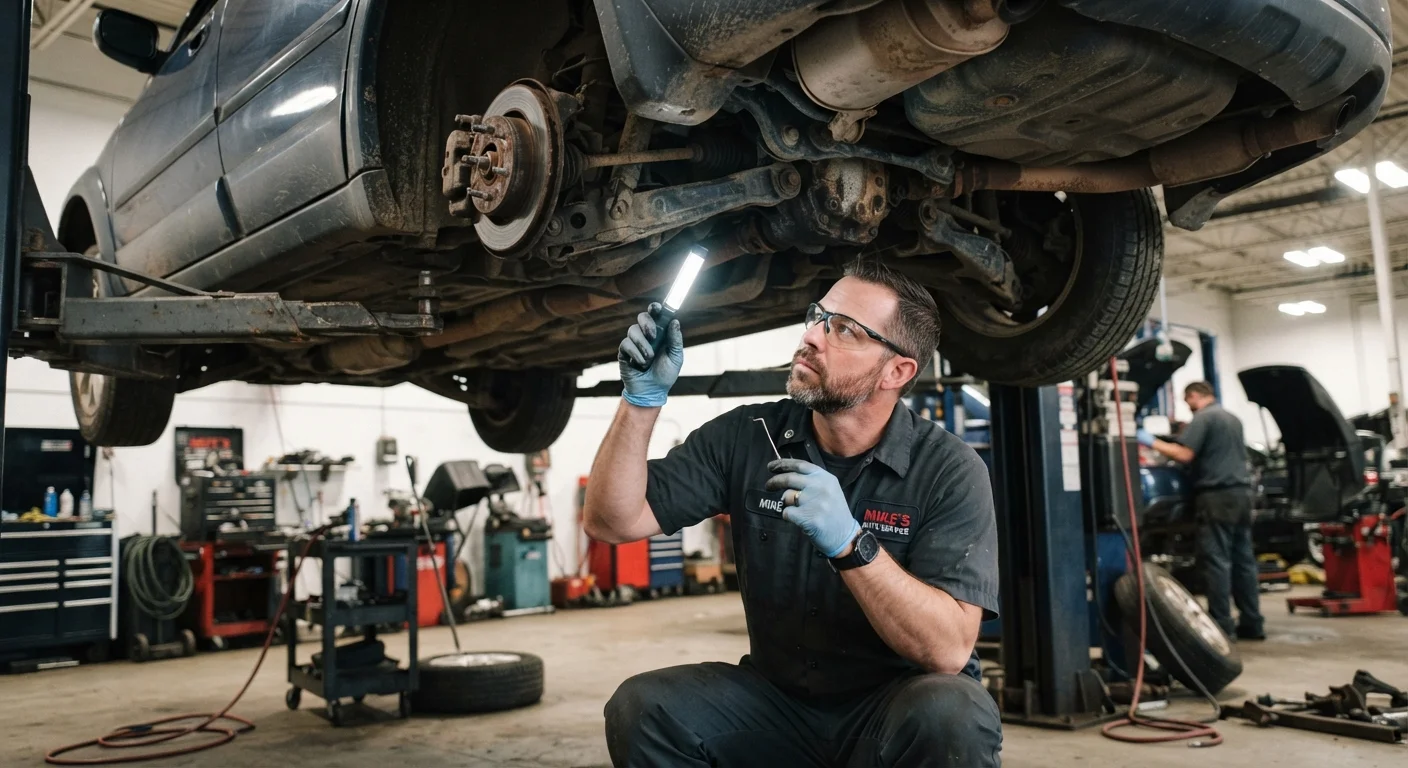
A pre-purchase inspection closes that gap. By having an independent mechanic examine the vehicle on a lift, with diagnostic tools and a trained eye, you get a factual assessment of the car's condition before you commit any money. Think of it as due diligence — the automotive equivalent of a home inspection before closing on a house.
For first-time buyers especially, a PPI removes much of the guesswork. You don't need to know how to read an oil dipstick or spot a cracked CV boot — your mechanic does. Their job is to translate the car's physical condition into plain language you can act on.
What a Pre-Purchase Inspection Covers
While the exact scope can vary by mechanic and shop, a thorough PPI typically examines the following areas:
- Engine and drivetrain: Oil condition, signs of leaks, belts, hoses, and whether the engine starts cleanly and runs smoothly.
- Transmission: Fluid condition, shifting behavior, and signs of slipping or unusual noise.
- Brakes: Pad thickness, rotor condition, and brake fluid level.
- Suspension and steering: Worn ball joints, tie rods, shocks, and struts — components that affect both ride quality and safety.
- Tires: Tread depth, uneven wear patterns (which can signal alignment or suspension issues), and overall condition.
- Underbody and frame: Rust, accident damage, and structural repairs — things invisible from a curbside look.
- Electrical systems: Lights, windows, HVAC, and dashboard warning signals.
- Fluid levels: Coolant, power steering, brake, and transmission fluids.
- OBD-II scan: A diagnostic scan of the car's onboard computer can surface stored fault codes that haven't yet triggered a warning light.
Many mechanics will also verify the VIN against a vehicle history report to check for title issues or odometer discrepancies.
$5,500+
Average cost of a major engine repair
Industry repair data consistently shows that significant powertrain failures represent the largest unexpected costs for used-car buyers.
~$150
Typical cost of a pre-purchase inspection
Most independent mechanics charge between $100 and $200 for a comprehensive PPI, depending on vehicle type and region.
1 in 5
Used cars with undisclosed prior damage
Vehicle history data providers have reported that a meaningful share of used cars on the market carry accident or damage history not disclosed by sellers.
How to Arrange a Pre-Purchase Inspection
The process is more straightforward than most first-time buyers expect. Here's how it typically works:
- Find an independent mechanic. Choose a shop that has no relationship with the seller. Ask friends for referrals, or look for a certified technician (such as one certified by ASE) in your area.
- Notify the seller. Ask permission to have the car inspected before purchase. Most legitimate sellers will agree — and reluctance to do so is worth noting.
- Bring the vehicle to the shop. Some sellers will drive the car to the mechanic; others may allow you to take it temporarily. Clarify logistics upfront.
- Review the report. Your mechanic should walk you through findings, explain what's urgent versus routine maintenance, and give you a realistic sense of upcoming repair costs.
Choose Your Mechanic Before You Need One
Don't wait until you've found a car to start looking for a mechanic. Identify a trusted independent shop in your area early in your car search. This way, when you find a vehicle you're serious about, you can move quickly without feeling pressured to skip the inspection.
Once you have the inspection report in hand, you're equipped to make a genuinely informed decision — whether that means proceeding with confidence, negotiating a lower price to account for needed repairs, or walking away entirely. Before you sign anything, review our questions to ask before signing a purchase agreement as a final check.
Using Inspection Findings to Your Advantage
An inspection report isn't just a pass/fail document — it's a negotiating tool. If the mechanic identifies worn brakes, a leaking gasket, or tires that need replacing soon, you have documented evidence to request a price adjustment or ask the seller to address repairs before the sale closes.
Keep in mind that no used vehicle is perfect. The goal isn't a spotless report — it's a clear picture of what you're getting into. Minor wear items on a well-maintained car are very different from signs of hidden accident damage or a major mechanical failure in progress.
Inspection Reports Are Not Guarantees
A PPI reflects the car's condition at a single point in time. It cannot predict every future failure or account for intermittent issues that weren't present during the inspection. Use the report as a major input in your decision — not the only one. Pairing it with a vehicle history report and a review of key purchase agreement terms gives you the most complete picture.
A thorough inspection also complements a vehicle history report, which tells you about a car's past (accidents, ownership, service records) while the mechanic tells you about its present condition. Together, they give you the most complete view possible before signing anything.