
Quiet Luxury, Maximalism, and Other Aesthetic Labels: A Plain-Language Glossary

| Number of named aesthetics tracked online | Hundreds (Aesthetic Wiki community documentation) |
| Origin of many modern aesthetic labels | Social media platforms (primarily TikTok, Tumblr, Pinterest) (Cultural commentary, broadly documented) |
| Capsule wardrobe typical size | 30–40 pieces (Fashion editorial consensus) |
| Quiet luxury defining characteristic | No visible logos; quality of material speaks instead (Fashion industry commentary) |
| Dopamine dressing concept origin | Explored by fashion researchers and psychologists studying color-mood connections (Academic and fashion press references) |
Why Aesthetic Labels Feel Overwhelming (And How to Use Them Instead)
Scroll through any style-focused platform and you'll be pelted with terms — quiet luxury, dark academia, cottagecore, dopamine dressing. For newcomers, these labels can feel like an exclusive language that everyone else already speaks. Good news: they're not rules or membership requirements. They're shorthand — compressed descriptions of a visual mood, a set of references, and a general feeling that a cluster of clothing choices evokes.
Think of aesthetic labels the way you'd think of genre tags in music. Knowing that a song is "indie folk" doesn't mean you have to love every band in that category, but it gives you a useful starting direction. The same logic applies here.
Labels Are a Starting Point, Not a Box
Aesthetic labels are tools for discovery, not rules you must follow perfectly. Many people find their personal style sits at the intersection of two or three aesthetics — and that's entirely the point. Use these definitions to spark ideas, not to restrict your choices. If you're ready to explore what resonates with you most, the beginner's aesthetic guide is a great next step.
Once you have a working vocabulary, browsing, shopping, and communicating about style becomes significantly less stressful. This glossary is your decoder ring — use it alongside our guide to finding your aesthetic to turn definitions into real style decisions.
The Glossary: Key Aesthetic Labels Defined
Below are the most commonly encountered aesthetic labels, decoded in plain language. Cross-reference any unfamiliar terms in our full glossary component for even more context.
Quiet Luxury
A style philosophy centered on understated, high-quality pieces with minimal branding, neutral palettes, and precise tailoring. The emphasis is on fabric and cut over logos, projecting affluence through subtlety rather than flash.
Maximalism
The 'more is more' approach to dressing and decorating — bold prints, layered textures, clashing colors, and statement accessories worn simultaneously. Maximalism treats personal style as visual storytelling with the volume turned up.
Dark Academia
An aesthetic inspired by gothic literature, classic universities, and autumnal tones. Think tweed blazers, plaid trousers, Oxford shirts, and a general atmosphere of candlelit libraries and vintage books.
Cottagecore
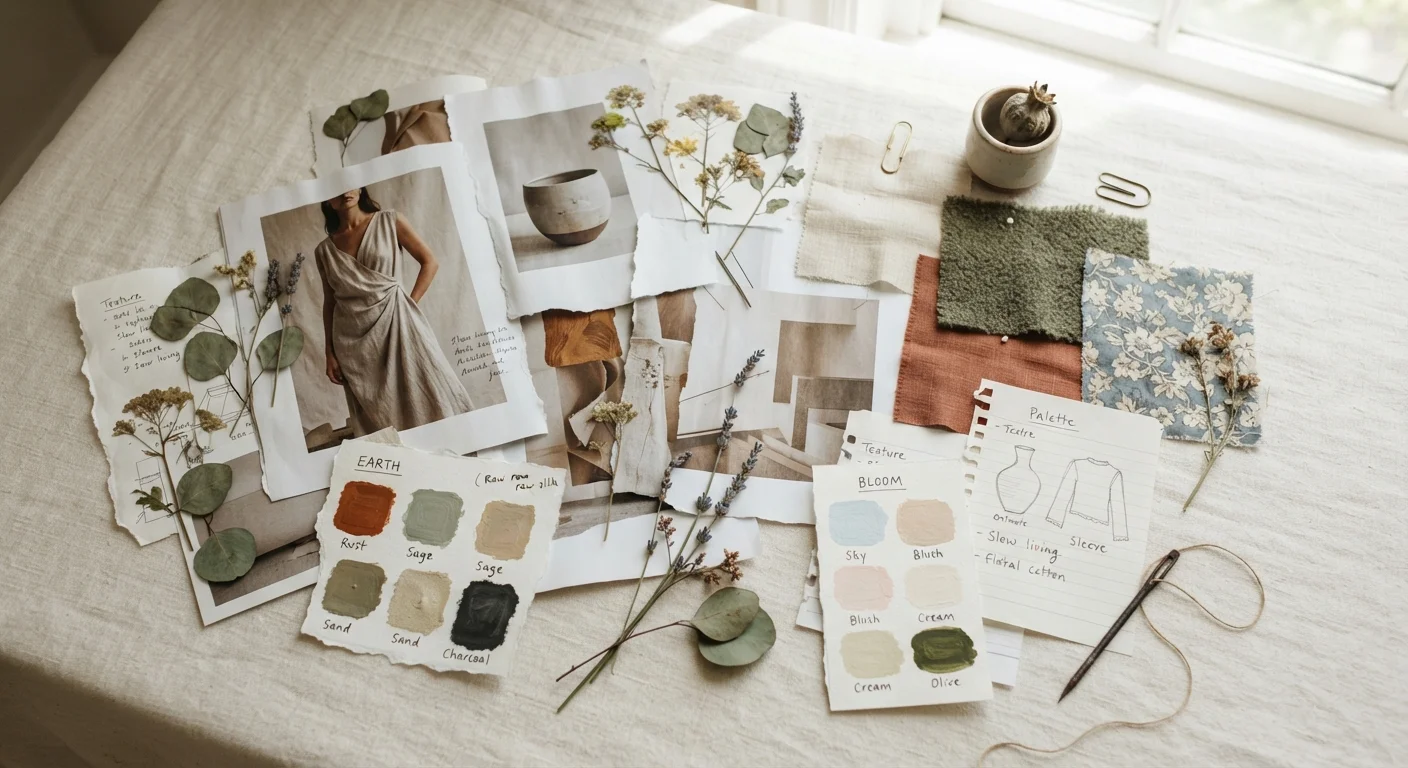
A romanticized take on rural, pastoral life expressed through floral prints, linen fabrics, prairie dresses, and handcrafted details. It celebrates slow living, nature, and an idealized countryside simplicity.
Old Money
Closely related to quiet luxury, old money dressing draws on prep school and country-club traditions — think polo shirts, loafers, striped blazers, and muted tones that suggest inherited rather than earned wealth.
Streetwear
A style rooted in skate, hip-hop, and youth culture, characterized by graphic tees, hoodies, sneakers, and relaxed silhouettes. It blurs the line between sportswear and fashion and is heavily influenced by limited-edition culture.
Coastal Grandmother
A relaxed, sun-washed aesthetic built on linen trousers, oversized knitwear, comfortable sandals, and earthy neutrals — evoking a leisurely life near the ocean with zero pretension.
Avant-Garde
Style that deliberately challenges conventional fashion rules through unconventional silhouettes, experimental fabrics, or unexpected construction. Avant-garde dressing is more art statement than everyday wardrobe.
Capsule Wardrobe
A curated collection of versatile, mix-and-match pieces — typically 30 to 40 items — that cover most dressing occasions without excess. The goal is intentional, coordinated simplicity over quantity.
Aesthetic Label
A shorthand descriptor — often popularized via social media — that clusters a set of style references, moods, and visual codes into a recognizable category. Labels like 'cottagecore' or 'dark academia' are aesthetic labels.
Dopamine Dressing
The practice of choosing clothing based on its ability to boost mood, using bright colors, playful patterns, and joyful silhouettes as emotional tools rather than purely aesthetic choices.
Minimalism
A design philosophy applied to style that prioritizes clean lines, a restrained color palette, and intentional editing. Minimalist dressing focuses on quality over quantity and avoids decorative excess.
Notice how many of these aesthetics exist on a spectrum rather than as hard categories. Quiet luxury and minimalism share DNA. Old money and dark academia both romanticize a certain kind of institution-adjacent dressing. Cottagecore and coastal grandmother are cousins in the 'soft, natural life' family. Spotting those overlaps is how you start to map your own taste.
If you find yourself reading product descriptions and still confused by terminology beyond style — our smart shopper's glossary covers the comparison and spec language that shows up on product pages.
Quick Reference: At a Glance
If you'd prefer a scannable snapshot before diving into full definitions, this quick-reference card covers the essentials.
| Number of named aesthetics tracked online | Hundreds (Aesthetic Wiki community documentation) |
| Origin of many modern aesthetic labels | Social media platforms (primarily TikTok, Tumblr, Pinterest) (Cultural commentary, broadly documented) |
| Capsule wardrobe typical size | 30–40 pieces (Fashion editorial consensus) |
| Quiet luxury defining characteristic | No visible logos; quality of material speaks instead (Fashion industry commentary) |
| Dopamine dressing concept origin | Explored by fashion researchers and psychologists studying color-mood connections (Academic and fashion press references) |
Style fluency builds gradually. Start by identifying one or two labels that feel instinctively right — aesthetics you keep gravitating toward in images, mood boards, or even home décor. From there, explore our Beauty Essentials hub for practical ways to express those aesthetics in your everyday routine.