

| U.S. Care Label Standard | ASTM D5489 (aligned with ISO 3758) (American Society for Testing and Materials) |
| Number of Core Symbol Categories | 5 (wash, bleach, dry, iron, dry clean) |
| What a circle inside a square means | Safe to tumble dry |
| Temperature dots on an iron icon | 1 dot = low, 2 = medium, 3 = high |
| X through any symbol | Do NOT perform that care action |
| Underlines beneath washing tub | 1 = permanent press; 2 = delicate cycle |
Why Care Labels Are Worth a Second Look
That little tag sewn into your collar or side seam isn't just scratchy filler — it's a precise set of instructions for keeping your garment in shape. Ignore it and you risk shrinking a wool sweater, fading a dark denim jacket, or ironing a heat-sensitive fabric into disaster. The good news: once you learn the symbol system, it takes about five seconds to decode any label.
Most clothing sold in the U.S. follows the ASTM D5489 standard, which aligns closely with international ISO symbols. This means the icons are consistent across most brands and countries — making the skill genuinely portable. If you're also building your foundational wardrobe, our guide to wardrobe essentials pairs well with this reference.
| U.S. Care Label Standard | ASTM D5489 (aligned with ISO 3758) (American Society for Testing and Materials) |
| Number of Core Symbol Categories | 5 (wash, bleach, dry, iron, dry clean) |
| What a circle inside a square means | Safe to tumble dry |
| Temperature dots on an iron icon | 1 dot = low, 2 = medium, 3 = high |
| X through any symbol | Do NOT perform that care action |
| Underlines beneath washing tub | 1 = permanent press; 2 = delicate cycle |
The Five Symbol Categories Decoded
Every care label draws from five core icon families. Here's how to recognize and read each one:
Washing (Tub Icon)
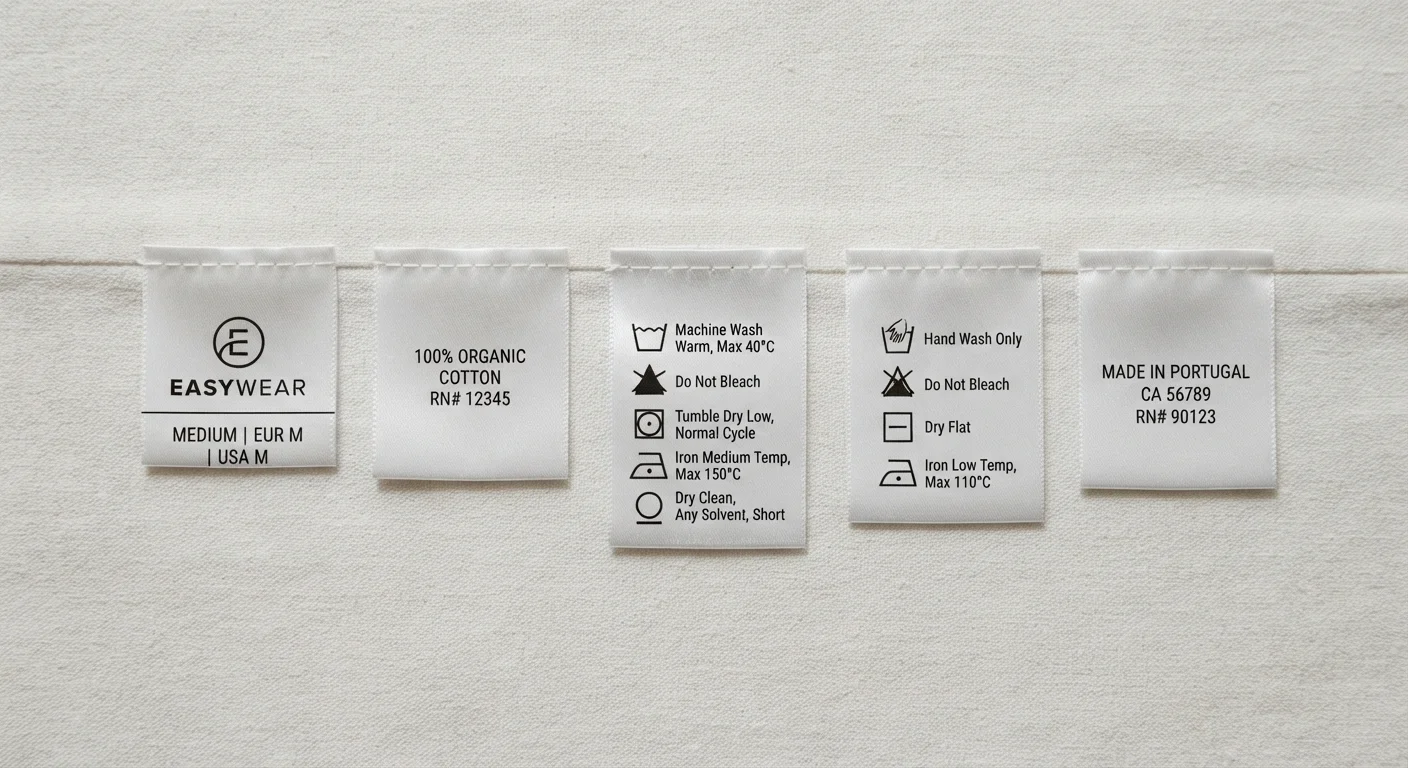
A plain tub means machine wash. Numbers inside the tub indicate the maximum water temperature in Celsius (e.g., 30°C ≈ cool/cold, 40°C ≈ warm, 60°C ≈ hot). A hand dipping into the tub means hand wash only. An X through the tub means do not wash at home — dry clean instead. One underline beneath the tub means use a permanent press cycle; two underlines mean use the delicate cycle.
Bleaching (Triangle Icon)
An empty triangle means any bleach is acceptable. A triangle with diagonal lines means use only non-chlorine (color-safe) bleach. An X through the triangle means do not bleach at all.
Drying (Square Icon)
A square with a circle inside is a tumble dryer symbol. One dot inside the circle = low heat; two dots = medium heat; three dots = high heat. A filled-in circle means tumble dry with no heat. An X cancels any icon it overlaps. Lines inside the square (no circle) describe flat or hang drying: a horizontal line = dry flat; a curved line at the top = hang to dry; three vertical lines = drip dry.
Ironing (Iron Icon)
Dots on the iron face indicate temperature: one dot = low (synthetics), two dots = medium (wool/polyester blends), three dots = high (cotton/linen). An X through the iron means do not iron. A small X on the steam lines beneath means no steam — use a dry iron only.
Dry Cleaning (Circle Icon)
A plain circle means dry clean. Letters inside (P, F, W) tell the dry cleaner which solvents to use — this is information for the professional, not you. An X through the circle means do not dry clean.
Permanent Press Cycle
A washing machine setting that uses medium heat and a cool-down rinse to reduce wrinkles in synthetic blends and treated fabrics. Gentler than a standard cycle but less delicate than hand wash.
Delicate Cycle
The washing machine's lowest agitation and spin setting, designed for fragile fabrics like lace, silk, and loosely knit materials.
Non-Chlorine Bleach
Also called oxygen or color-safe bleach, this milder bleach alternative lifts stains without the harsh fabric degradation or color stripping associated with chlorine bleach.
Dry Flat
A drying method in which a garment is laid horizontally on a towel or mesh rack to dry, preventing gravity from stretching the fabric — especially important for knits and wool.
Dry Clean
A professional cleaning process that uses chemical solvents instead of water, suitable for structured garments, delicate fabrics, or items that would shrink or distort when wet.
ASTM D5489
The American standard for care labeling symbols on textile products, which requires manufacturers to include permanent, legible care instructions on clothing sold in the U.S.
Practical Tips for Laundry Day
Armed with the symbols, a few habits make a real difference. Sort clothes by care requirement before washing — grouping everything that needs a cold delicate cycle saves time and prevents accidents. When in doubt between two temperature settings, choose the cooler one; heat is the leading cause of shrinkage and color loss. Check labels before you buy, not just before you wash — a garment requiring dry-clean-only care has an ongoing cost that's worth factoring in. Label care doesn't only apply to washing; proper storage matters too. Folding knit fabrics rather than hanging them prevents shoulder stretching, and keeping dark garments away from direct sunlight slows fading. Reading labels is the same skill set as decoding any product specification — once you practice it for clothing, it feels natural everywhere. See how similar logic applies in our beauty ingredients guide.
This article is for general informational purposes only. Garment care results may vary depending on fabric composition, dye, and individual product construction. When in doubt, consult a professional dry cleaner.