

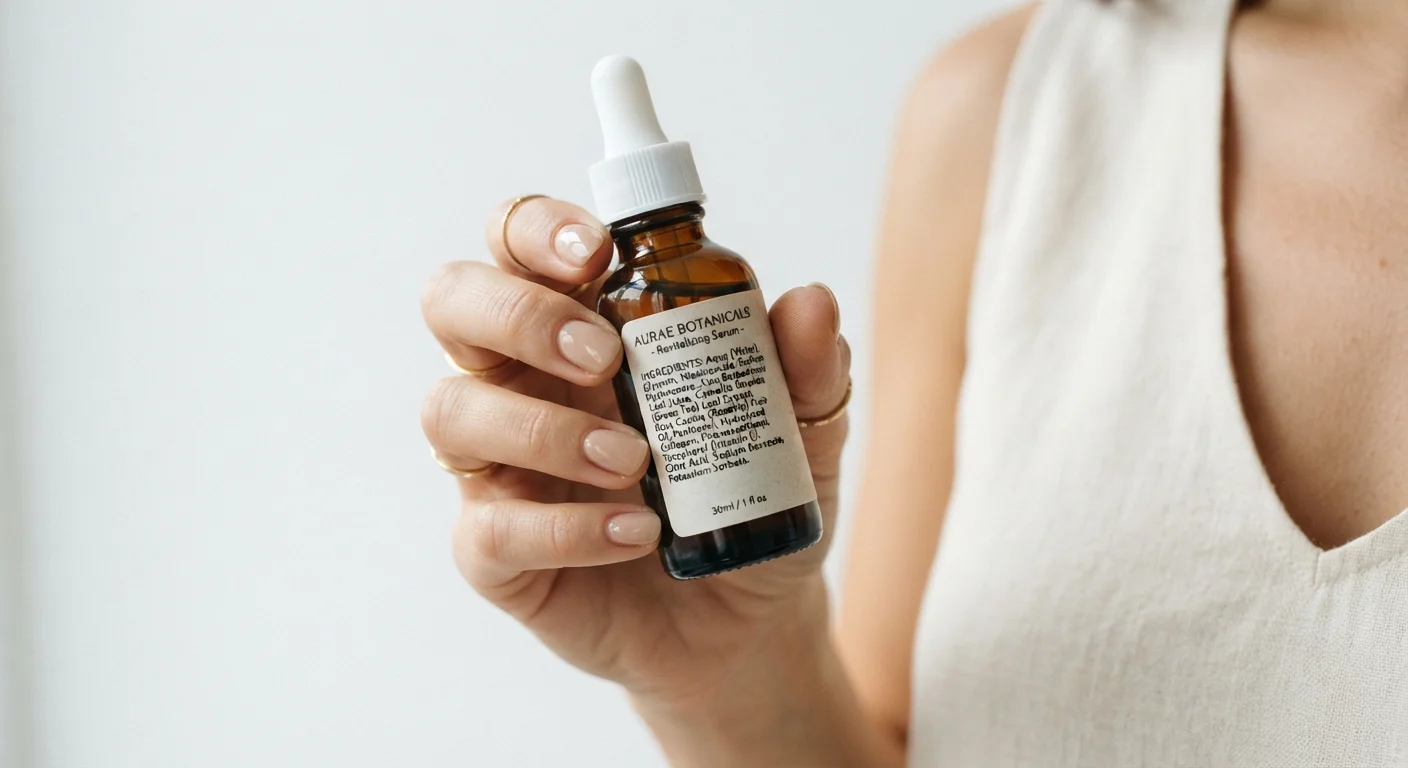
Key Takeaways
- Ingredients are listed in descending order by concentration, so the first five matter most.
- Many intimidating chemical names are simply safe, well-studied compounds with Latin or IUPAC labels.
- Knowing a few key ingredient categories — humectants, emollients, preservatives — covers most formulas.
- Fragrance and certain preservatives are among the most common causes of skin sensitivity reactions.
- You don't need to recognize every ingredient — just learn to spot the ones relevant to your skin concerns.
What you will need
Why Ingredients Lists Look Scarier Than They Are
Pick up almost any moisturizer and the back panel reads like a university chemistry exam. Butylene glycol. Phenoxyethanol. Tocopheryl acetate. Intimidating? Absolutely. Necessary to decode every word? Not even close.
The good news: cosmetic ingredients lists follow a universal naming system called INCI, which uses standardized scientific names regardless of brand or country. That's why "water" always appears as Aqua and vitamin E shows up as Tocopherol. Once you understand the system, the list stops looking random and starts telling a real story about what a product does — and whether it suits you.
This skill is worth building. Just as decoding a food label reveals what you're putting into your body, reading a skincare label reveals what you're putting onto it. The principles share surprising similarities — and the payoff in confidence is just as high.
What you will need
The Core Framework: How to Read Any Ingredients List
Before diving into specific ingredients, it helps to understand the rules that govern every list. Cosmetic regulations in the U.S. require that ingredients be listed in descending order of concentration — meaning the first ingredient makes up the largest portion of the formula, and the last the smallest. Ingredients present at 1% or less can be listed in any order after that threshold.
Armed with that one fact, you can already do a lot. If water (Aqua) is first and a trendy active ingredient is near the bottom, that active is likely present in a very small amount. Not necessarily a problem — some actives are effective at low concentrations — but good to know.
Find the First Five Ingredients
Flip the product over and locate the ingredients list — usually in small print near the bottom of the label. Read the first five entries. These make up the bulk of the formula and define what the product fundamentally is: a water-based gel, an oil-heavy balm, a silicone-based primer. If something beneficial isn't in the top five, its concentration is likely modest.
Identify Any Known Actives or Concerns
Scan the full list for ingredients you recognize as actives — retinol, vitamin C (ascorbic acid), AHAs like glycolic or lactic acid, niacinamide. Note roughly where they appear. Also flag anything you know has caused your skin issues before, including specific preservatives or fragrance. You don't need to decode every word — your goal here is a quick triage.
Look Up Any Unfamiliar Names That Concern You
If something catches your attention — especially near the top of the list — search the INCI name followed by "cosmetic ingredient" in any search engine. Reputable sources include the U.S. Food and Drug Administration (FDA) cosmetics pages and peer-reviewed cosmetic science databases. Avoid drawing conclusions from a single source, and remember that "chemical sounding" does not mean dangerous.
Check for Fragrance and Common Sensitizers
Search the list for the words Fragrance, Parfum, or Flavor. Also look for common sensitizers like methylisothiazolinone (MI) or certain botanicals like lavender oil (Lavandula angustifolia), which can be irritating despite their natural origin. If you're new to skincare or have reactive skin, a shorter, fragrance-free list is often a safer starting point.
Compare Across Products You're Considering
Once you know what to look for, place two or three products side by side. Do they share the same first few ingredients? Is the active you care about higher up in one formula than another? This kind of structured comparison — rather than relying on marketing copy alone — is exactly what smart product comparison looks like in practice.
Fragrance deserves special attention. Whether listed as Fragrance, Parfum, or broken into individual aromatic compounds, it's one of the most common triggers for skin reactions. If you have sensitive skin, it's worth learning more — our companion piece on fragrance in beauty products walks through exactly what to watch for.
The 1% Rule Is Your Secret Weapon
Ingredients present at or below 1% concentration can be listed in any order after the main formula. This means a long list of exotic-sounding botanicals near the end of a label may each be present in trace amounts. It doesn't make them useless, but it does temper expectations about how much heavy lifting they're doing.
Common Ingredient Categories Decoded
Rather than memorizing hundreds of names, learn to recognize ingredient types. Most formulas are built from the same functional building blocks:
- Humectants — Draw moisture into the skin. Look for glycerin, hyaluronic acid (sodium hyaluronate), and urea.
- Emollients — Soften and smooth the skin surface. Common examples include squalane, shea butter (Butyrospermum parkii), and various plant oils.
- Occlusives — Form a barrier to lock moisture in. Petrolatum, dimethicone, and beeswax (Cera alba) fall here.
- Emulsifiers — Keep water and oil mixed together in creams and lotions. Names often end in -eth or include cetearyl.
- Preservatives — Prevent microbial growth and extend shelf life. Phenoxyethanol, sodium benzoate, and parabens serve this purpose. Preservatives are necessary for product safety; the debate around specific types is ongoing, but unpreserved formulas pose their own risks.
- Actives — Ingredients included for a specific skin benefit, such as niacinamide (brightening), retinol (cell turnover), or salicylic acid (exfoliation).
Recognizing these categories lets you quickly assess whether a product is likely to hydrate, protect, or treat — and whether its formula is substantive or mostly water and filler.
Don't Self-Diagnose Skin Conditions From Labels
Identifying an ingredient that may be irritating is useful self-advocacy, but it isn't a substitute for professional assessment. If you're experiencing persistent redness, breakouts, or allergic reactions from personal care products, a dermatologist can perform proper patch testing and give you accurate guidance. This article is general educational information, not medical advice.