

Key Takeaways
- User reviews reveal real-world usage patterns that spec sheets and marketing copy cannot capture.
- Review volume, star averages, and review tone can all be distorted by incentives or selection bias.
- The most useful reviews are specific, verified, and written by people with similar needs to yours.
- Recurring complaints across many reviews are more diagnostic than isolated five-star praise.
- Treat reviews as one input in a broader comparison process, not a final verdict.
Our Verdict
User reviews are genuinely useful when read critically and in context — they surface real-world performance gaps that marketing materials routinely hide. But treated as a simple popularity score, they can mislead as easily as they inform. The goal is to extract signal from noise, not outsource your decision entirely to crowd opinion.
Shoppers who want to move past star-count paralysis and build a reliable, repeatable habit of reading reviews as evidence rather than endorsement.
Why Reviews Feel More Trustworthy Than They Are
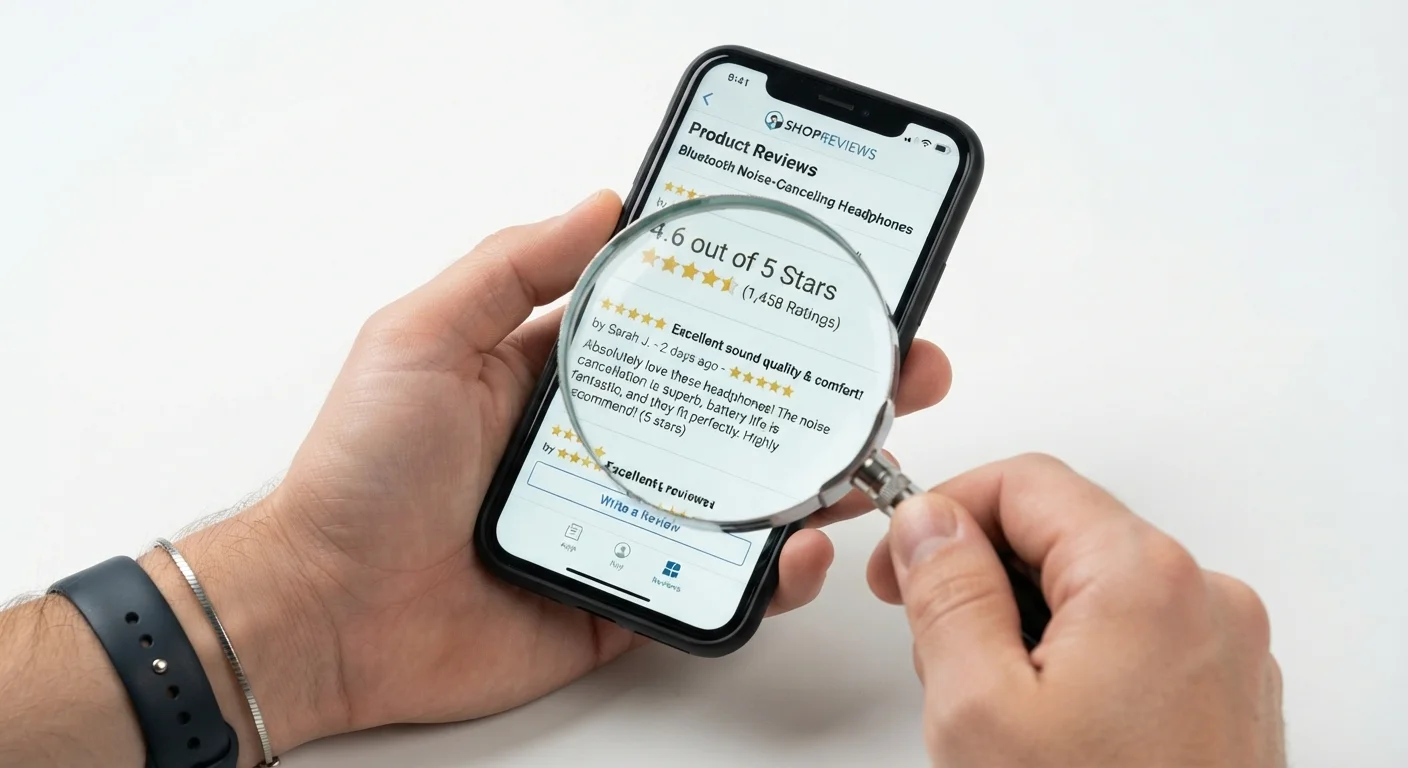
Star ratings tap into a powerful psychological shortcut: if thousands of people gave something four and a half stars, it must be good. That instinct is understandable — but it conflates popularity with suitability. A product can accumulate high ratings because it was heavily promoted to enthusiastic early adopters, because the seller followed up with incentivized review requests, or simply because dissatisfied buyers didn't bother to return and write a review.
This isn't a fringe problem. Platforms that host reviews have acknowledged ongoing challenges with manipulated or incentivized submissions. Even without bad-faith interference, selection bias shapes what you see: people who feel strongly — positively or negatively — are far more likely to write reviews than satisfied but indifferent customers. The result is a rating distribution that may not reflect the median buyer's experience at all.
For a deeper look at how star ratings are structurally distorted, see how ratings can mislead.
What Reviews Actually Do Well
Despite their limitations, user reviews remain one of the few places where real-world performance is documented at scale. No spec sheet tells you that a zipper fails after three months, that a blender's noise level makes it unusable in an apartment, or that customer support took two weeks to respond. Reviews capture those details.
The most diagnostic signals to look for:
- Recurring themes in negative reviews — if the same complaint appears across dozens of unrelated reviewers, it reflects a genuine product characteristic, not a one-off bad experience.
- Use-case specificity — a reviewer who describes a situation close to yours (same household size, same use frequency, same prior product) is far more relevant than a generic five-star endorsement.
- Verified purchase labels — while not foolproof, reviews flagged as verified purchases have at least one layer of platform accountability.
- Long-term durability notes — reviews written months after purchase often contain the most candid assessments of how a product holds up over time.
Reviews complement — rather than replace — the kind of structured comparison covered in feature lists vs. real-world performance.
A Practical Framework for Reading Reviews Critically
Rather than scanning for an overall impression, treat review reading as a structured exercise:
- Sort by most critical first. One- and two-star reviews surface the failure modes a product has. Skim for repeated complaints rather than emotional language.
- Filter by your own profile. Most platforms let you filter by reviewer attributes or keywords. Search for terms that match your intended use — "daily commute," "sensitive skin," "small kitchen" — and read those results separately.
- Look at review date distribution. A product with 4,000 reviews posted in a single week should prompt skepticism. Organic review accumulation tends to be gradual.
- Discount superlatives without specifics. "Best purchase ever" tells you nothing. "Held up through 18 months of daily use with no issues" tells you something meaningful.
- Cross-reference sources. Independent editorial reviews, forum discussions, and community Q&A sections often surface details that platform reviews miss.
Applying this framework is part of avoiding broader buyer traps — habits worth building across every category. The Avoiding Buyer Traps hub covers the wider landscape of how marketing and platform design shape purchasing decisions.
When to Rely on Reviews Less
Some categories are especially prone to review distortion. New product launches often rely on seeded reviews from early testers. Commodity items — generic accessories, private-label goods — can share manufacturing origins while carrying wildly different review profiles under different brand names.
High-stakes categories like health products, financial tools, and insurance-related services deserve particular caution: glowing reviews don't substitute for verifying credentials, regulatory standing, or professional suitability for your specific situation. Always consult a qualified professional before acting on reviews in those domains.
Reviews also say little about how well a product fits your specific context. A highly rated item may genuinely underperform for your use case — and a product with middling scores may be exactly what you need. That gap is worth keeping front of mind. For a closer look at how crowd-sourced opinion can lead shoppers astray, see myths that lead shoppers to make worse comparisons.