

Key Takeaways
- Start with net income, not gross, to set spending limits you can actually meet.
- Categorize every recurring and irregular expense before allocating discretionary funds.
- Overspending usually stems from missing categories, not weak willpower.
- Review and adjust your budget at least once per quarter or after any major life change.
- A written or digital budget beats mental estimates by reducing decision fatigue.
Why a Shopping Budget Changes Everything
Most first-time buyers make their biggest financial missteps not because they earn too little, but because they lack a concrete plan for what they've already earned. A shopping budget isn't a restriction — it's a decision made in advance, before emotion, urgency, or clever marketing can interfere.
Research in consumer behavior consistently shows that people who set explicit spending limits before shopping spend measurably less and report higher satisfaction with their purchases than those who shop without a plan. When your limits are pre-decided, you shift from reactive spending to intentional spending.
For a comprehensive foundation covering income, saving, and spending together, see the personal finance fundamentals guide. This article focuses specifically on the shopping dimension of that broader picture.
65%
Adults without a written spending plan
Consumer Financial Protection Bureau research indicates a majority of U.S. adults do not maintain a documented monthly budget.
20–30%
Typical unplanned spending share
Studies in consumer behavior suggest that unplanned purchases account for roughly one-fifth to one-third of total shopping spend for buyers without set limits.
Calculate Your True Available Income
The first step in any reliable shopping budget is knowing your net income — the amount that lands in your account after taxes, retirement contributions, and any other automatic deductions. Gross income (what you earn before deductions) will always overstate what you have available and set you up to overspend.
Once you have your net monthly figure, subtract all fixed obligations: rent or mortgage, utility bills, insurance premiums, loan repayments, and subscriptions. What remains is your discretionary pool — the ceiling from which your shopping budget is drawn.
If your income is variable (freelance, hourly, or commission-based), use a conservative baseline — typically the lowest month you earned over the previous three to six months — rather than an average. This prevents you from building a budget that only works in good months.
Need a step-by-step framework for this calculation? The six-step monthly budget guide walks through the full process in practical detail.
Anchor your budget to last month's actual bank statement, not to what you think you spent. The numbers are almost always different — and the gap is where most budgets quietly fail.
Memory consistently underestimates small, frequent purchases. A statement-based starting point gives you an honest baseline rather than an optimistic one.
Before finalizing any category limit, add 10–15% to your first estimate as a reality buffer. First-time budgeters almost universally underestimate category spend.
Planning optimism is a well-documented cognitive bias; building in a buffer prevents the frustration of a budget that fails in week two and gets abandoned entirely.
Assign Spending Limits by Category
Discretionary spending rarely fails at the total level — it fails category by category. Shoppers who set one lump-sum limit often find it consumed by a single category (clothing, electronics, groceries) with nothing left for others they also needed.
The more durable approach: divide your discretionary pool into named categories with individual ceilings. Common shopping categories include groceries, clothing, household goods, personal care, electronics, and entertainment. Your mix will differ based on your lifestyle, but the principle holds: named categories are harder to accidentally overdraw.
Many first-time buyers are surprised by how many categories they overlook. The spending categories guide covers the ones most frequently missed, including irregular purchases like seasonal clothing and annual subscriptions.
Name Every Dollar Before You Spend It
As soon as income arrives, allocate it to specific categories — even if some allocations are just savings. Money without an assigned purpose tends to disappear into low-priority spending. This habit, sometimes called zero-based allocation, forces intentionality at the point of receipt rather than at the point of regret.
A practical starting framework is allocating roughly 50% of net income to needs, 30% to wants, and 20% to savings and debt repayment — though these ratios should be adjusted to your actual circumstances. This is general guidance, not personalized financial advice; a licensed financial adviser can help you tailor these proportions.
Common Budget Pitfalls and How to Avoid Them
Even well-intentioned budgets break down. Understanding the most common failure points helps you design around them from the start.
- Forgetting irregular expenses. Annual subscriptions, back-to-school shopping, and holiday gifts aren't monthly — but they're predictable. Divide their annual total by 12 and set aside that amount each month.
- Underestimating small purchases. Coffee, apps, and impulse additions at checkout accumulate quickly. Tracking these for two to four weeks before finalizing your budget reveals spending patterns you likely didn't realize existed.
- Setting limits too tight. Budgets that leave no room for unexpected needs fail fast. Build in a small buffer — a modest miscellaneous line — to absorb minor surprises without derailing the whole plan.
- Treating the budget as fixed forever. A budget built for your circumstances six months ago may not reflect your life today. Rigid adherence to an outdated plan is its own form of financial mismanagement.
The buyer traps guide covers how retailer tactics — urgency cues, bundling, and anchor pricing — can undermine even a solid budget, and what to do about it.
Impulse Spending Is a System Problem
If you consistently overspend in a category, the instinct is to blame self-control. In most cases, the real culprit is a missing system: no pre-commitment, no visible balance check, no pause before purchase. Before concluding that willpower is the issue, audit the process — the fix is usually structural, not personal.
Sticking to Your Budget in Real Life
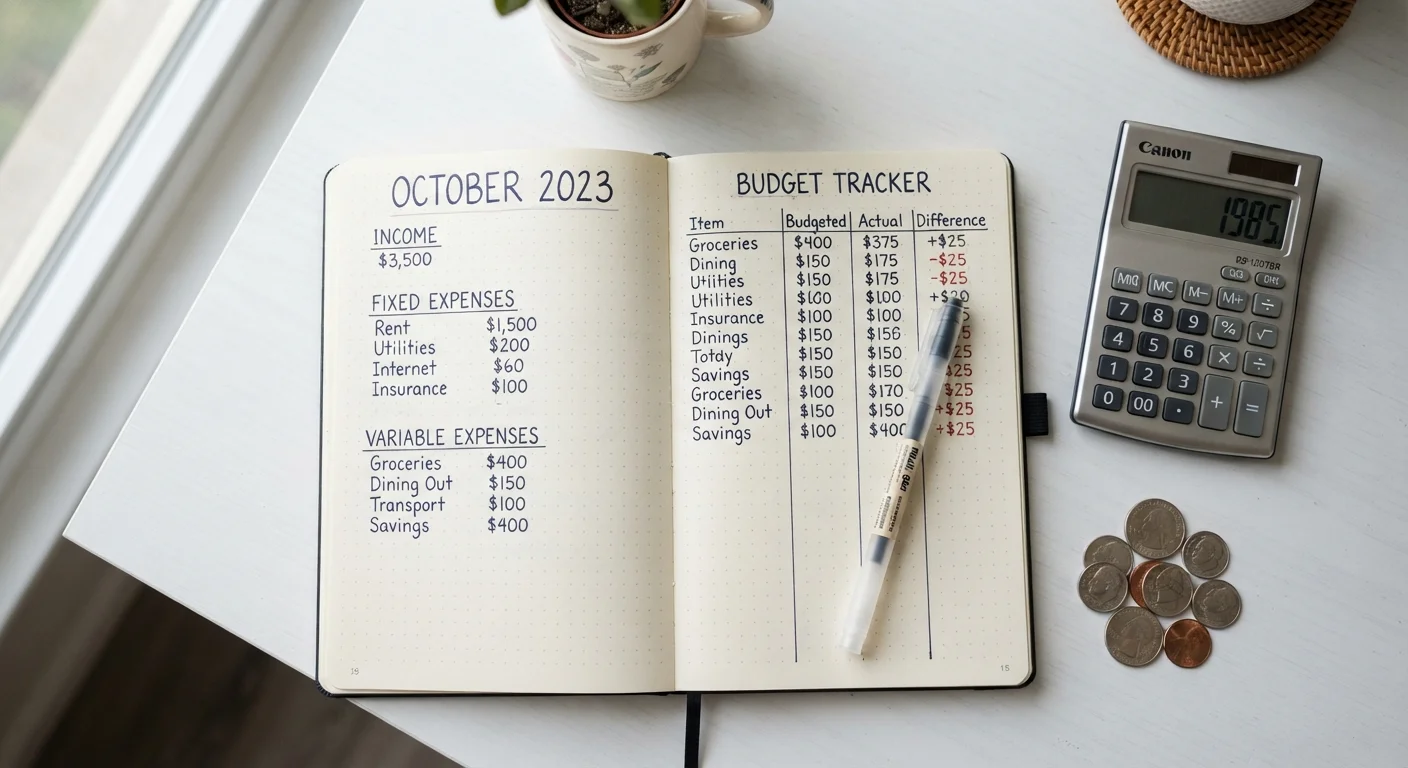
A budget that exists only in your head is not a budget — it's a vague intention. The single most effective habit change is writing your limits down or entering them into a tracking tool before the spending period begins.
Practical tactics that consistently help:
- Check your category balances before shopping, not after. Knowing you have $40 left in your clothing budget before you enter a store changes what you look at on the racks.
- Use a dedicated account or envelope for each major category. Physical or digital separation makes overspending immediately visible rather than hidden in a single account total.
- Impose a short waiting period on non-essential purchases. A 24- to 48-hour pause between wanting and buying eliminates a significant share of impulse decisions without requiring willpower in the moment.
- Review weekly, not just monthly. A monthly review catches problems too late to correct. A brief weekly check — five to ten minutes — keeps you aware and in control.
For broader strategies on making smarter decisions across every shopping category, the spending smarter guide provides a practical framework applicable to electronics, clothing, appliances, and more.
“A budget is telling your money where to go instead of wondering where it went.”
— John C. Maxwell, Author and speaker on leadership and personal development
When and How to Adjust Your Budget
A budget is a working document, not a permanent contract. There are two types of situations that call for revision: planned life changes and discovered mismatches.
Planned changes include a new job, moving to a new city, a significant purchase like a vehicle, or the addition of a new household member. These warrant a full budget rebuild from the income-calculation step.
Discovered mismatches are subtler: you consistently overspend one category while underspending another, or your fixed obligations have quietly increased. These call for reallocation rather than an overhaul — shift the ceiling of one category down, and another up, while keeping total discretionary spending constant.
At minimum, review your full budget once per quarter. If reviewing feels overwhelming, start with the budgeting from zero framework to rebuild a clean foundation.
Budgeting is a skill that compounds. The clarity you build in your first few months of intentional tracking pays dividends in every purchase decision you make afterward — not just in what you save, but in the confidence with which you spend.
This article provides general financial information for educational purposes only and is not personalized financial or investment advice. Consult a qualified financial adviser for guidance tailored to your individual circumstances.