
Collar, Harness, or Both: Understanding Leash and Restraint Options for Dogs

Key Takeaways
- Collars work well for calm, leash-trained dogs but can put pressure on the trachea if a dog pulls.
- Harnesses distribute force across the chest and body, making them safer for small breeds, puppies, and pullers.
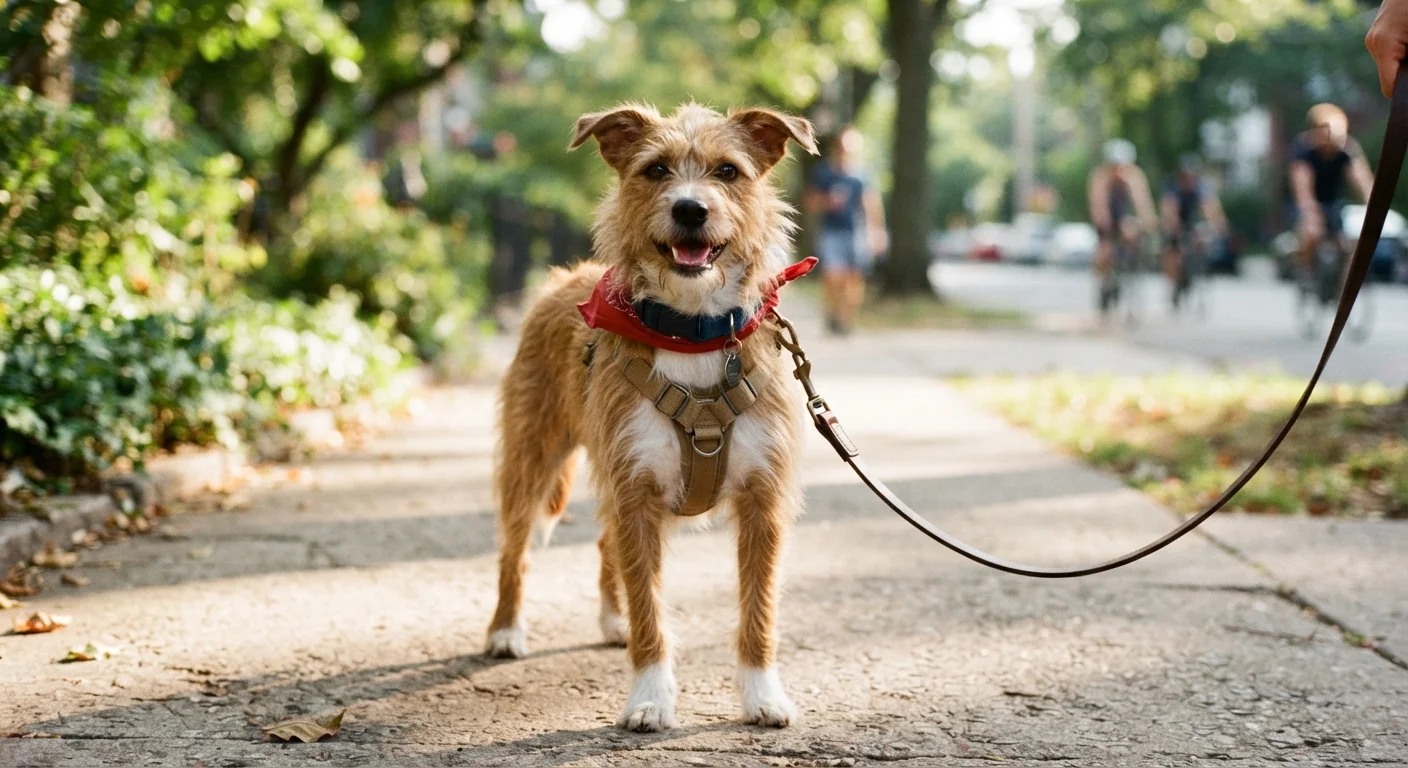
- Many owners use both: a collar for ID tags and a harness as the leash attachment point.
- Brachycephalic (flat-faced) breeds and dogs with neck injuries should generally avoid collar-only leash walking.
- Fit matters most — an ill-fitting collar or harness can cause injury or allow escape regardless of type.
Our Verdict
Neither collars nor harnesses are universally superior — the right choice depends on your dog's size, breed, health, and training stage. Most new dog owners benefit most from using a harness as the primary leash attachment while keeping a collar for ID tags. As training progresses and your dog's needs become clearer, you can reassess.
| Best for | Recommended |
|---|---|
| Calm, leash-trained adult dogs with no neck or trachea concerns | Collar |
| Puppies, pullers, small breeds, and brachycephalic dogs | Harness |
| Most new dog owners wanting a safe, practical everyday setup | Both (collar for ID, harness for leash) |
Why the Choice Matters More Than You Might Think
When you bring a dog home for the first time, collars and harnesses can feel like minor details compared to food, training, and shelter. In practice, the restraint you choose has a direct impact on your dog's physical safety, comfort during walks, and even their behavior on the leash.
The core difference is simple: a collar wraps around the neck, while a harness wraps around the chest and torso. But that anatomical difference has meaningful consequences — especially for dogs that pull, have respiratory sensitivities, or are still learning how to walk on a leash. See our complete new dog owner supply guide for broader context on what to prioritize before stocking up.
Collars: What They Do Well and Where They Fall Short
Collars are the most common dog restraint, and for good reason. They're easy to put on, durable, and ideal for carrying ID tags and license information — something every dog should have regardless of what you use for walking.
For dogs that are already leash-trained and don't pull heavily, a well-fitted flat collar can work fine as a leash attachment. The risk comes when a dog lunges or pulls consistently: force concentrates directly on the neck and trachea, which can contribute to injury over time, particularly in small dogs and those with collapsing trachea or similar conditions.
Brachycephalic breeds — such as Bulldogs, Pugs, and French Bulldogs — have compressed airways by nature, which makes collar-only leash walking especially problematic for them.
Avoid Collar-Only Walking for At-Risk Dogs
Dogs with collapsing trachea, intervertebral disc disease, or brachycephalic anatomy face elevated risk of injury when leash pressure is applied to the neck. If your dog has any of these conditions — or if they are a breed commonly predisposed to them — consult your veterinarian before deciding on a restraint setup. Do not rely on this article as a substitute for breed- or health-specific veterinary guidance.
Regardless of collar type, the two-finger rule is the standard fit check: you should be able to slide two fingers under the collar, but no more. Too loose and a dog can slip out; too tight and it restricts breathing and causes discomfort.
Harnesses: Better Force Distribution, More to Manage
A harness distributes leash pressure across the chest, shoulders, and back rather than the neck. This makes it a significantly safer option for dogs that pull, puppies whose necks are still developing, and any breed with known respiratory or cervical spine vulnerabilities.
Back-clip harnesses (where the leash attaches on the dog's back) are the most beginner-friendly: they're easy to put on and comfortable for calm walkers. Front-clip harnesses (leash attaches at the chest) are often recommended during leash training because the attachment point naturally redirects a pulling dog toward you rather than forward.
The trade-off is fit complexity. A harness has more adjustment points than a collar, and an ill-fitted one can chafe underarms, restrict shoulder movement, or allow a dog to back out entirely. Take time to check fit each time you put it on, especially during your dog's growth stages.
Check Harness Fit Regularly
Puppies grow quickly and adult dogs' weight can fluctuate. A harness that fit perfectly last month may now be too tight or loose. Build a quick fit check into your pre-walk routine — run your fingers along all the straps to confirm there's no pinching and no excess slack. This takes under 30 seconds and significantly reduces the risk of chafing or escape.
Understanding your dog's body language during walks can help you assess whether their current restraint is causing stress or discomfort. Our guide to reading pet body language explains what to look for.
Collar vs. Harness vs. Both: A Side-by-Side Look
The table below summarizes how each approach performs across the criteria that matter most to new dog owners.
| Collar Only | Harness Only | Collar + Harness | |
|---|---|---|---|
| ID tag placement | Yes, standard | Not ideal alone | Yes, on collar |
| Neck/trachea pressure | High if dog pulls | None | None (leash on harness) |
| Ease of daily use | Very easy | Moderate | Slightly more steps |
| Suitable for pullers | No | Yes (front-clip) | Yes (front-clip harness) |
| Recommended for puppies | Not as leash point | Yes | Yes |
| Safe for flat-faced breeds | No | Yes | Yes |
| Escape risk | Low if fitted correctly | Moderate if ill-fitted | Low overall |
Making the Right Call for Your Dog
For most new dog owners, the practical answer is to use both: a flat collar for ID tags and a harness as the leash attachment point. This gives you the identification benefits of a collar without routing leash pressure through the neck.
Your dog's size, breed, age, and walking behavior should all inform your decision. A large, leash-trained adult dog with no health concerns may do perfectly well with a collar alone. A small breed puppy who pulls constantly is almost certainly better served by a front-clip harness from day one.
If you're unsure which configuration suits your dog, your veterinarian is a good first resource — they can flag any anatomical or health considerations specific to your dog's breed or condition. A certified dog trainer can also advise on restraint choices as part of leash training. Supplies are just one part of a responsible dog ownership setup; for a fuller picture, explore our new dog owner essentials overview.
This article is for general informational purposes only. Consult your veterinarian for guidance specific to your dog's health, breed, or physical condition.