

Key Takeaways
- Body condition scoring (BCS) measures fat and muscle coverage, not just scale weight.
- Vets use a standardized 9-point scale to assess dogs and cats consistently.
- You can perform a basic BCS check at home using touch and visual observation.
- Both underweight and overweight conditions carry real health risks for pets.
- A BCS assessment should complement, not replace, regular veterinary checkups.
What you will need
Why Body Condition Score Matters More Than Weight Alone
A number on a scale tells you how heavy your pet is — it does not tell you whether that weight is healthy. Two dogs of the same breed and similar weight can have very different body compositions: one may be lean and muscular, the other carrying a significant fat layer. That distinction matters because excess body fat in pets is associated with joint stress, reduced mobility, diabetes risk, and a shorter lifespan, according to veterinary nutrition research.
Body condition scoring closes that gap. It gives you and your vet a shared language for evaluating your pet's physical state across visits, across weight changes, and across the lifespan. For senior pets, whose muscle mass naturally declines with age, this distinction becomes especially important — a healthy scale weight can mask muscle loss that BCS would reveal.
BCS is also a practical complement to the broader signs of wellness that owners can observe at home. Our article on what a healthy pet actually looks like covers other physical indicators that, alongside BCS, give you a fuller picture of your pet's wellbeing.
What you will need
How to Assess Your Pet's Body Condition at Home
Your hands
Used to feel for ribs, spine, and fat coverage — the core of a hands-on BCS check.
A bathroom or pet scale
Provides numeric weight data to track trends over time alongside BCS results.
A BCS reference chart
Visual guide showing body silhouettes for each score on the 1–9 scale, available from most veterinary clinics.
Understand what the BCS scale measures
The Body Condition Score (BCS) is a standardized tool veterinarians use to evaluate a pet's fat and muscle coverage. The most widely used scale runs from 1 to 9: 1 represents severely underweight, 5 is ideal, and 9 is severely obese. Unlike a single scale reading, BCS accounts for variation in breed, age, and frame size.
A score of 4–5 is generally considered healthy for most dogs and cats. Scores of 6–7 indicate overweight, while 8–9 signal obesity. Scores of 1–3 suggest underweight conditions that warrant veterinary attention.
Feel along the ribcage
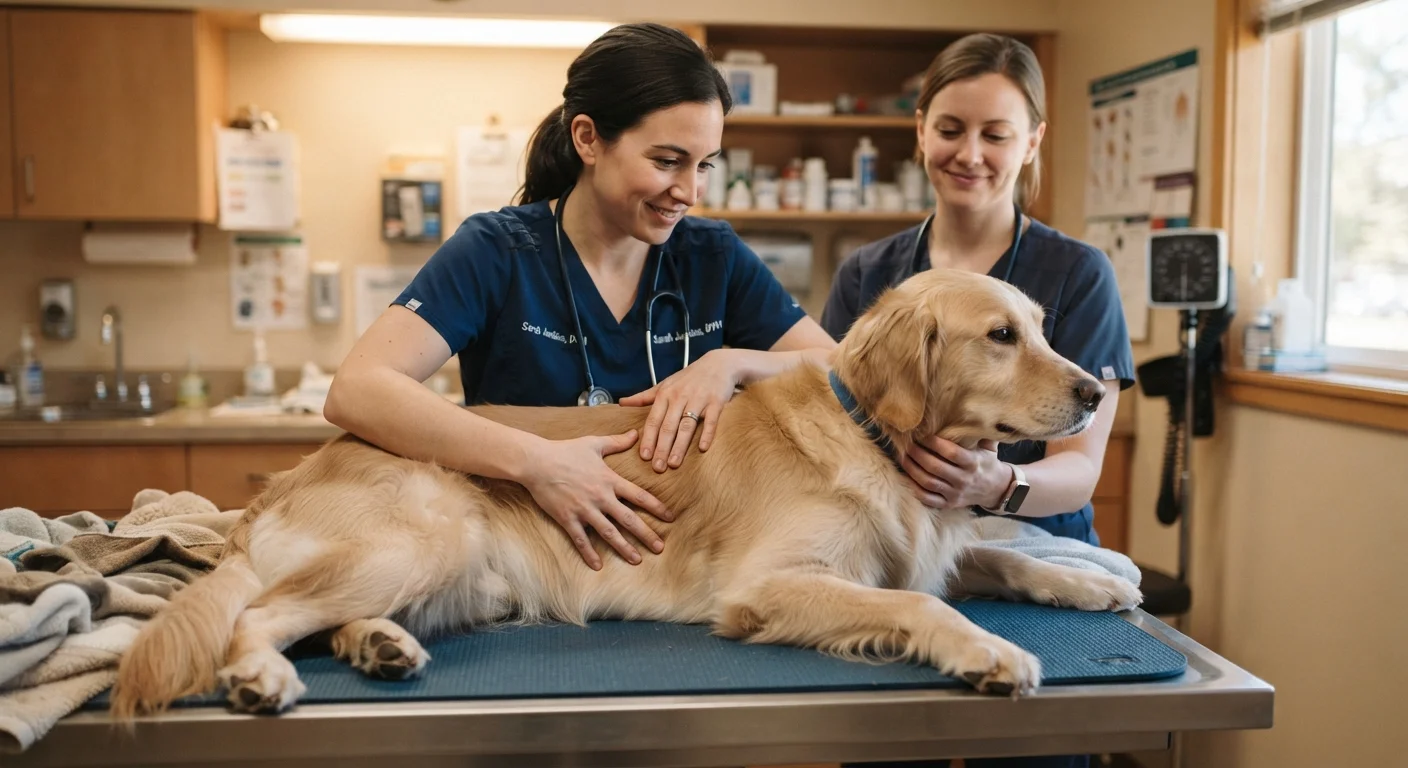
Place both hands flat along the sides of your pet's chest and gently run your fingers across the ribs. You should be able to feel individual ribs without pressing hard, but they should not be visually prominent or sharp to the touch.
- Ideal (score 4–5): Ribs are easily felt with light pressure, with a thin fat layer over them.
- Overweight (score 6–7): Ribs require firm pressure to feel; noticeable fat layer present.
- Underweight (score 1–3): Ribs, spine, and hip bones are highly prominent with no detectable fat coverage.
Check the waist and abdominal tuck
Step back and look at your pet from above and from the side.
- From above: An ideal pet shows a visible waist — a gentle narrowing behind the ribs.
- From the side: There should be a slight upward tuck of the abdomen behind the rib cage.
A pet with no visible waist or a rounded, sagging abdomen when viewed from the side is likely carrying excess weight. A very pronounced tuck or hourglass shape may suggest underweight status.
Assess the spine and hip bones
Run your hand along the spine and lightly press over the hip area. In a healthy pet, the vertebrae should be felt but not visually stand out. The hip bones should be palpable with light pressure but not protruding.
Prominent, easily visible bony points in these areas — especially combined with low ribcage coverage — suggest the pet may be underweight and should be evaluated by a vet.
Assign a score and track it over time
Based on your observations, estimate where your pet falls on the 1–9 scale. Record the score along with the date. Repeating this check monthly gives you a meaningful trend to share with your veterinarian — more useful than a single data point.
Weight changes of more than 10% in either direction over a few months are worth discussing at your pet's next checkup. See our guide to annual wellness visits to understand how vets use this information during routine exams.
Consistency Makes BCS More Useful
Try to assess your pet's body condition at the same time of month, before a meal, and in good lighting. Recording your score in a simple notebook or phone note — along with date and weight if available — turns a one-off check into a meaningful health trend. Share this log with your vet at each visit.
What to Do With Your Results
A home BCS check is informational, not diagnostic. If your assessment suggests your pet falls outside the 4–5 range, the appropriate next step is a conversation with your veterinarian — not an immediate diet change. Rapid weight loss in cats, in particular, can cause a serious liver condition called hepatic lipidosis, which is why any dietary adjustments should be guided by a professional.
Your vet can confirm your BCS observation, rule out underlying conditions that affect weight (such as thyroid dysfunction or fluid retention), and recommend a specific feeding or exercise plan suited to your pet's age, breed, and health status.
Incorporating BCS checks into a regular home routine is one of the habits covered in our guide to home pet-wellness routines that vets endorse. Small, consistent observations over time are far more valuable than a single check performed in a moment of concern.
Rapid Weight Loss in Cats Is a Medical Emergency
Cats who stop eating or lose weight rapidly are at risk of hepatic lipidosis (fatty liver disease), a potentially life-threatening condition. If your cat has lost noticeable weight over a short period or has reduced food intake significantly, contact your veterinarian promptly rather than waiting for a routine appointment.
This article provides general educational information about body condition scoring and is not a substitute for professional veterinary advice. Always consult a licensed veterinarian for guidance specific to your pet's health.