

Key Takeaways
- Introduce grooming gradually — short, positive sessions build tolerance faster than long, stressful ones.
- Brushing, nail trims, and ear checks each require different tools suited to your pet's coat and species.
- Reward-based reinforcement helps pets associate grooming with something good rather than something threatening.
- A consistent grooming schedule prevents matting, overgrown nails, and ear infections over time.
- Stop a session if your pet shows sustained stress signals — pushing through can set back progress.
- When in doubt about technique or frequency, consult your veterinarian or a certified groomer.
What you will need
Why Home Grooming Is Worth the Effort
Regular grooming is not purely cosmetic. Brushing stimulates circulation and removes loose fur before it forms painful mats. Nail trims prevent posture and joint issues caused by nails that curl or force unnatural weight distribution. Ear checks catch early signs of infection before they become serious. For new pet owners, learning to do these tasks at home also means you handle your pet regularly — which makes veterinary exams and emergencies easier to manage because your pet is already comfortable being touched.
The challenge most first-time owners face is not the grooming itself, but the resistance they get. A pet who has never been groomed will often squirm, vocalize, or try to escape — not out of aggression, but out of unfamiliarity. The solution is gradual, structured introduction rather than a single comprehensive session. If your pet shows behavioral reactions during grooming beyond simple restlessness, understanding what drives pet behavior can help you identify whether something deeper is going on.
Species-appropriate brush or comb
Removes loose fur, debris, and tangles — type depends on coat length and texture.
Nail clippers or grinder
Keeps nails at a safe, comfortable length to prevent overgrowth and posture problems.
Ear cleaning solution
Used to gently clean the outer ear canal and prevent wax or debris buildup.
Styptic powder
Stops minor bleeding quickly if a nail is accidentally trimmed too short.
High-value treats or lick mat
Provides positive reinforcement to build your pet's tolerance for handling.
Non-slip mat
Keeps your pet stable and reduces anxiety caused by slipping on hard floors during grooming.
Before You Begin: Set Up for Success
The right environment matters as much as technique. Choose a consistent grooming spot — a bathroom counter for small animals, a non-slip mat on the floor for larger dogs — so your pet begins to associate that space with grooming over time. Keep sessions at similar times of day when your pet is calm, such as after a walk or meal rather than during peak energy periods.
Understanding which tools suit your pet's coat type and species is essential before you start. Our grooming supplies guide breaks down what each tool is designed for and how to match it to your animal. You may also find it helpful to review the first 90 days wellness checklist if you are still in the early weeks of pet ownership.
What you will need
Step-by-Step: Building Your Grooming Routine
The steps below are designed to be introduced progressively over days or weeks, not completed in a single sitting. Move to the next step only when your pet shows calm, consistent acceptance of the current one.
Know When to Stop the Session
If your pet is panting heavily, freezing, growling, or trying to escape repeatedly, end the session immediately and give them space. Forcing a stressed animal through grooming can cause lasting fear and make future sessions significantly harder. Progress is measured in weeks, not single sessions — patience always wins over persistence.
Let Your Pet Explore the Tools First
Before any grooming begins, place your brush, clippers, and other tools on the floor and let your pet sniff and investigate them freely. Do not attempt to use anything yet. This desensitization step prevents the tools from being associated exclusively with restraint or discomfort.
Repeat this for one to two short sessions — two to five minutes each — until your pet shows little or no reaction to the items.
Practice Handling Without the Tools
Before introducing a brush or clippers, get your pet comfortable with being touched on the areas grooming will involve: paws, ears, face, and along the back. Use gentle, deliberate strokes and pair each touch with a treat or calm praise.
If your pet pulls away from paw handling — common in dogs and cats — work on just touching one paw briefly, reward, and stop. Gradually extend duration over multiple sessions.
Introduce Brushing in Short Passes
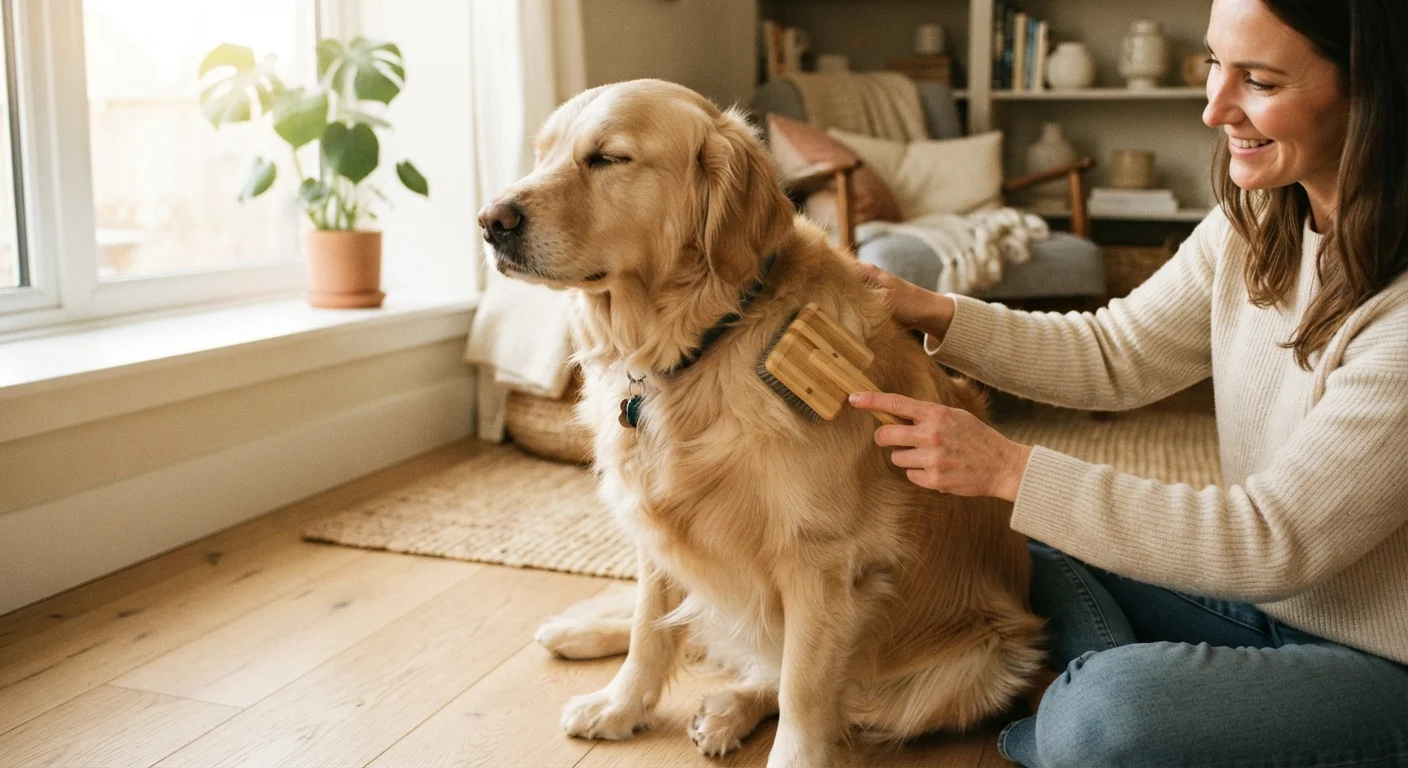
Once your pet tolerates handling, add the brush. Start with a single gentle stroke along the back — the least sensitive area — then offer a treat. Gradually increase the number of strokes per session over days or weeks, moving toward the belly, legs, and face only after the back is accepted.
For long-coated animals, work section by section to prevent pulling on mats. If you find a tangle, hold the base of the fur with your fingers before brushing through it so the pull doesn't travel to the skin.
Trim Nails Gradually, One Nail at a Time
Nail trimming is often the task pets tolerate least, so build up to it slowly. Start by simply touching the paw with the closed clippers, reward, and put the clippers down. Over several sessions, progress to pressing gently on the paw to extend the nail, then finally to trimming just the tip of one nail before stopping and rewarding generously.
You do not need to complete all nails in a single session. Trimming two or three nails per sitting and returning the next day is entirely effective and far less stressful.
Check and Clean Ears Gently
Ear checks should be a weekly habit. Look for redness, unusual odor, excessive dark discharge, or your pet scratching at their ears — these can be signs of infection that warrant a veterinary visit, not home treatment.
For routine cleaning of the outer ear, apply a veterinarian-recommended ear cleaning solution to a cotton ball and wipe only what you can see. Never insert anything into the ear canal. Reward immediately after each ear is checked.
Build a Consistent Grooming Schedule
Grooming done irregularly is harder on both you and your pet. A predictable schedule — even a brief weekly session — keeps your pet habituated to the process and prevents issues like overgrown nails or matted fur from accumulating.
Incorporate grooming into your broader care routine. See our pet daily routine guide for ideas on how to structure consistent care across the day. For a fuller picture of what at-home wellness habits look like, this wellness routine overview covers the habits veterinarians most commonly recommend.
Use Your Pet's Meal Time Strategically
Pairing grooming touch with something your pet already loves — like a small treat or a lick mat — creates positive associations faster than treats alone. Try introducing a brush while your pet eats to build neutral, then positive, feelings about the tool.
This article provides general pet care information for educational purposes only. It is not a substitute for advice from a licensed veterinarian. If your pet shows signs of pain, ear infection, skin conditions, or extreme grooming-related fear, please consult a qualified veterinary professional.