

Key Takeaways
- Spec sheets are written for marketing purposes, not to help you make an informed decision.
- Focusing on a few key specifications relevant to your use case is more effective than reading every line.
- Unfamiliar units and acronyms can often be decoded with a simple framework and no technical expertise.
- Context matters more than raw numbers — a higher number is not always better.
- Cross-referencing specs with user reviews helps close the gap between listed features and real-world performance.
What you will need
Why Spec Sheets Feel Confusing — and Why That's by Design
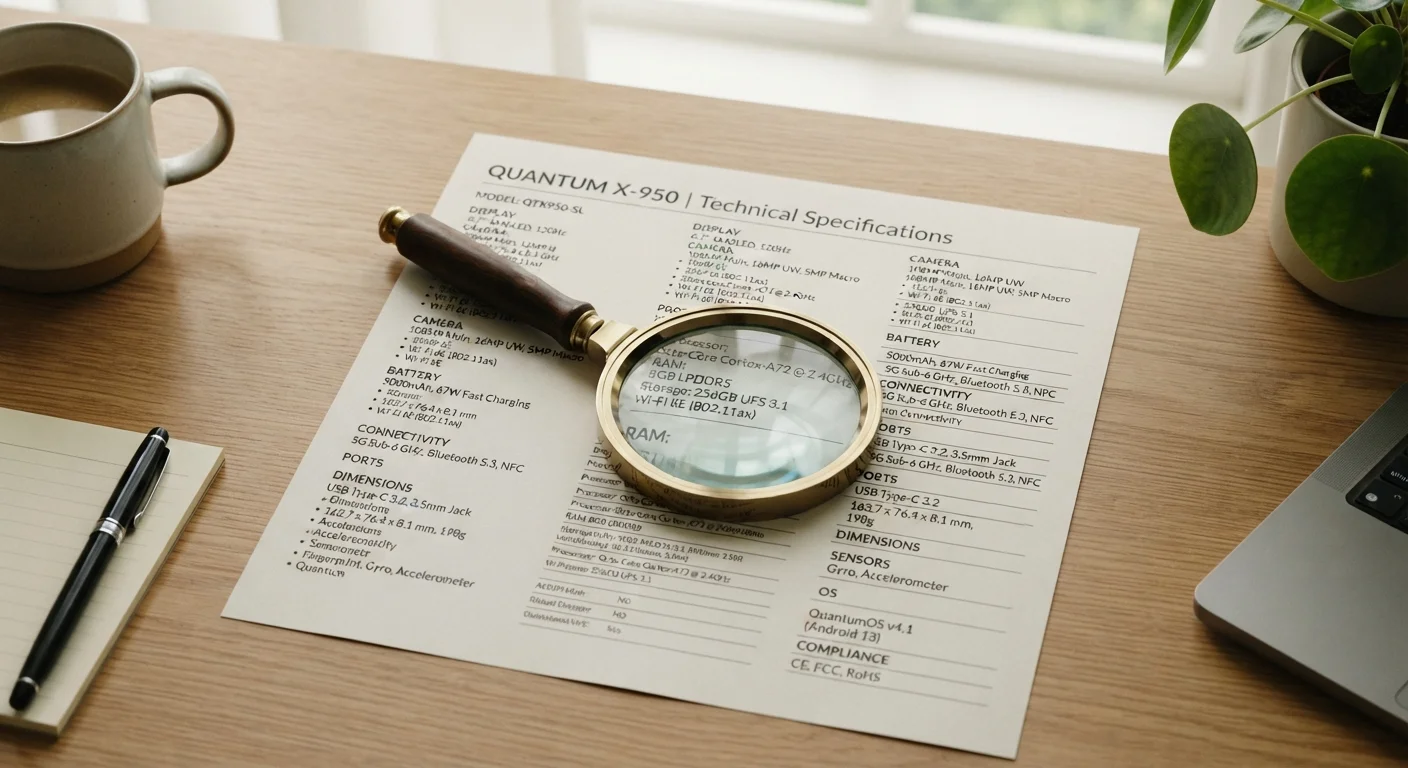
Product specification sheets are created by manufacturers, not neutral third parties. Their primary function is to support a sale, which means they emphasize figures that look impressive and minimize or omit figures that might raise questions. This is not necessarily deceptive — but it does mean the sheet is organized around marketing priorities, not your decision-making needs.
The result is a document packed with acronyms, proprietary brand names, and raw numbers stripped of context. A first-time buyer scanning a spec sheet for the first time is likely to feel one of two things: overwhelmed by detail, or falsely reassured by numbers that appear large. Neither response leads to a good purchasing decision.
Understanding this dynamic is the first step. The sheet contains useful information — you just need a method for finding it. The same critical reading skill applies across categories: whether you're evaluating a household appliance or trying to make sense of a beauty product ingredients list, the underlying challenge is the same.
What you will need
Product spec sheet or listing page
The primary document you will be reading and evaluating during this process.
Manufacturer's glossary or support page
Helps decode proprietary terms or branded feature names that don't have obvious plain-language equivalents.
Independent user reviews
Provides real-world context that bridges the gap between listed specifications and everyday performance.
How to Work Through a Spec Sheet Methodically
The steps below give you a repeatable framework you can apply to any product category — electronics, appliances, fitness equipment, or otherwise. Work through them in order the first time; with practice, the process becomes faster.
Define what the product needs to do for you
Before reading a single specification, write down the two or three things you actually need the product to accomplish. For example: battery that lasts a full workday, fits in a carry-on bag, or connects to an existing device you already own. This list becomes your filter — any spec that doesn't relate to these outcomes can be set aside.
Identify the unit of measurement and what it represents
Most specs pair a number with a unit — GHz, mAh, lumens, dB, inches, kg. If you don't recognize the unit, look it up before drawing any conclusions. Units tell you what kind of thing is being measured: capacity, speed, brightness, weight, or size. Without this step, comparing two numbers is meaningless.
Common units to know: mAh (milliamp-hours) measures battery capacity; GHz (gigahertz) measures processor clock speed; nits measures screen brightness; dB (decibels) measures sound level; ms (milliseconds) measures response time.
Separate essential specs from marketing extras
Spec sheets often include a mix of functional specifications and branded feature names designed to sound impressive. A functional spec is measurable and comparable (e.g. 256 GB storage). A branded feature name is proprietary (e.g. 'UltraVision Engine') and may or may not correspond to a meaningful technical difference.
When you see a branded term, search for its plain-language description on the manufacturer's support or glossary page. If no plain-language explanation exists, treat it with skepticism. For a deeper look at which categories of specs are commonly inflated, see Eight Laptop Specs That Sound Important But Rarely Are.
Look for context clues and qualifying language
Phrases like up to, typical, maximum, and under optimal conditions signal that a figure reflects a best-case scenario. Read footnotes carefully — they often contain the practical limits of a headline number. A battery listed at '20 hours' in the headline may note in a footnote that this was measured at minimum screen brightness with Wi-Fi disabled.
[warning_callout]Compare like-for-like across options
When comparing two products, make sure you're comparing the same specification measured the same way. One manufacturer may list storage as total capacity; another may list usable capacity after system files. One may measure weight without accessories; another may include a cable. If the measurement methods differ, the comparison is misleading.
For a broader framework on evaluating product comparisons, the Comparing Products hub covers how to structure a fair side-by-side evaluation across any category.
Cross-reference specs with real-world user feedback
Specifications describe potential; user reviews describe experience. After narrowing your options using specs, look for patterns in verified user reviews that speak to your specific priorities. If battery life or noise level is your concern, search reviews specifically for those terms. Consistent feedback from multiple independent reviewers carries more weight than any single number on a spec sheet.
For a broader perspective on why spec sheets and real-world performance often diverge, see Feature Lists vs. Real-World Performance.
Build a Short Spec Checklist Before You Shop
Before opening any product listing, write down the two or three outcomes that matter most to you — long battery life, lightweight design, fast charging, and so on. This prevents you from being swayed by specs that sound impressive but have no bearing on your actual needs. The Smart Shopper's Glossary is a useful reference for translating common comparison terms before you start.
Specs Don't Guarantee Real-World Results
A specification describes what a product is capable of under controlled or ideal conditions — not what you will typically experience in daily use. Manufacturers are not required to match real-world performance to listed specs. Always treat specifications as a starting point for comparison, not a guarantee of experience.
For a plain-language reference covering common comparison vocabulary — including terms like TCO (total cost of ownership), warranty terminology, and compatibility flags — see The Smart Shopper's Glossary. Understanding the financial side of a purchase, including restocking fees and depreciation, is equally important — Key Financial Terms Every New Shopper Should Know covers those basics in plain language. And if you want to avoid common marketing traps beyond spec sheets, the Avoiding Buyer Traps hub is a useful next read.