

Key Takeaways
- Fibre supports digestive health; most Americans fall well short of the recommended daily amount.
- Added sugars and total sugars are listed separately — added sugars are the ones worth watching most closely.
- Sodium is easy to underestimate because it accumulates across multiple servings and packaged foods.
- The % Daily Value column tells you at a glance whether a nutrient amount is high or low.
- You don't need to memorize every number — focusing on fibre, sugar, and sodium covers a lot of ground.
- Always consult a healthcare professional or registered dietitian for guidance tailored to your personal health needs.
Nutrition Facts Label
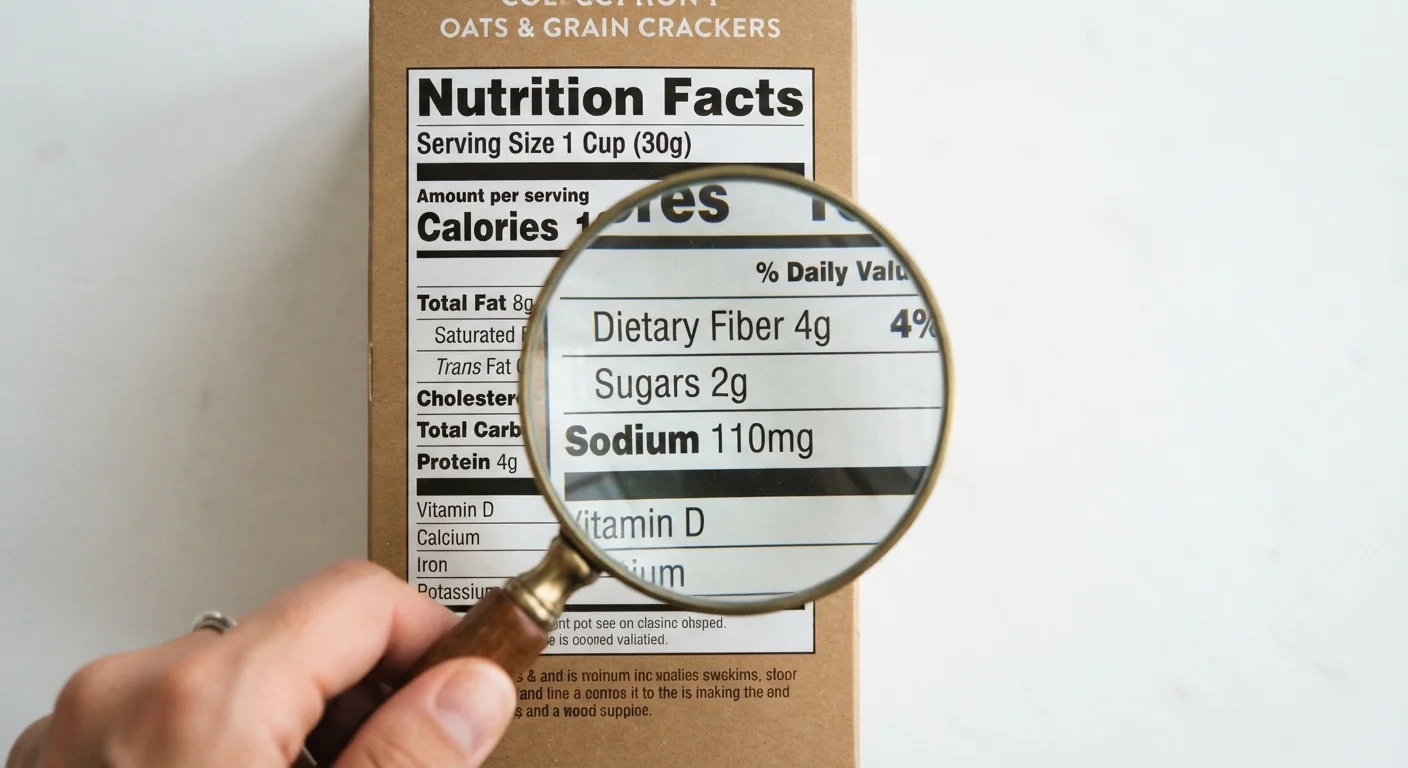
The Nutrition Facts label is a standardized panel required on most packaged foods in the United States. It lists key nutrients — including fibre, sugar, and sodium — along with their amounts per serving. Understanding even a few of these numbers can help you make more informed choices at the grocery store.
The U.S. Food and Drug Administration (FDA) sets the format and required content of Nutrition Facts labels; the Daily Value (DV) percentages shown are based on a reference diet of 2,000 calories per day.
Why These Three Numbers?
Food labels contain a lot of information, and staring at a panel while standing in a grocery aisle can feel overwhelming. The good news: you don't need to decode every line. Fibre, sugar, and sodium are three nutrients that routinely appear in public health guidance because they have a clear, well-established relationship with everyday diet quality.
Each one is easy to locate on any Nutrition Facts panel, and each tells you something distinct about a food. Think of them as a practical starting trio — not the whole picture, but a reliable first lens. For a deeper foundation, the nutrition terminology glossary covers the broader vocabulary you'll encounter on labels.
7%
U.S. adults meeting daily fibre recommendations
Research published in nutrition journals has repeatedly found that only a small fraction of American adults meet recommended fibre intakes.
3,400 mg
Average daily sodium intake in the U.S.
According to the American Heart Association, the average American consumes well above the generally recommended limit of 2,300 mg per day.
17 tsp
Average daily added sugar consumption
The American Heart Association estimates average U.S. added sugar intake at around 17 teaspoons per day, roughly double the suggested limit for many adults.
Fibre: The Number to Aim Higher On
Dietary fibre is the part of plant foods — vegetables, fruits, whole grains, legumes — that your body cannot fully digest. That sounds like a drawback, but it's actually beneficial. Fibre helps regulate digestion, contributes to feelings of fullness, and plays a role in maintaining stable blood sugar levels, among other functions recognized in nutrition research.
On the label, fibre appears under Total Carbohydrate. The % Daily Value next to it reflects a reference intake of 28 grams per day (based on a 2,000-calorie diet). Survey data consistently shows that most Americans consume well under this amount. When comparing packaged foods, a higher fibre number per serving generally signals a more filling, less processed option.
A Quick Fibre Check at the Shelf
When comparing two similar products — say, two types of bread — simply look at the fibre grams per serving. The higher number generally indicates more whole grain content and less processing. Pairing fibre-rich foods across your day (oats at breakfast, legumes at lunch) is an easy way to build toward a healthy intake without major diet changes.
Sugar: Reading Both Lines
The sugar section of the label now shows two figures: Total Sugars and, indented beneath it, Added Sugars. This distinction matters. Total sugars include everything — the natural sugars in milk or fruit juice, plus whatever was added during manufacturing. Added sugars are the ones that public health guidance most often addresses, because they contribute calories without additional nutritional value.
Added sugars go by many names in ingredient lists — corn syrup, cane juice, dextrose, and others. If you want a fuller breakdown of how to read ingredient language, the guide on reading an ingredients list offers a useful parallel approach. On the Nutrition Facts panel itself, checking the Added Sugars % Daily Value is the simplest move: the FDA's reference is 50 grams of added sugars per day.
Sodium: The Cumulative Problem
Sodium is measured in milligrams (mg), and it's one of the easiest nutrients to unknowingly overconsume. That's because sodium adds up across a full day of eating, not just from an obvious culprit like chips or canned soup. Bread, condiments, deli meats, and even some breakfast cereals can carry meaningful sodium amounts.
The key habit is checking the serving size before reading the sodium number. If a can of soup lists 800 mg per serving but contains two servings, the full can delivers 1,600 mg — a significant portion of the general daily guidance of under 2,300 mg. People with certain health conditions may have different targets, which is why personalized guidance from a healthcare provider matters. Use the % Daily Value as a quick benchmark: 20% DV or above per serving means sodium is high in that food.
This article provides general nutrition information for educational purposes and is not a substitute for personalized medical or dietary advice. Please consult a qualified healthcare professional or registered dietitian for guidance specific to your health needs.