

Key Takeaways
- A consistent wake time anchors your sleep schedule more effectively than a fixed bedtime.
- Alcohol disrupts sleep architecture even when it helps you fall asleep faster.
- Eight hours is a population average, not a universal prescription for every adult.
- Screen light's effect on sleep is real but modest — anxiety about sleep often causes more harm.
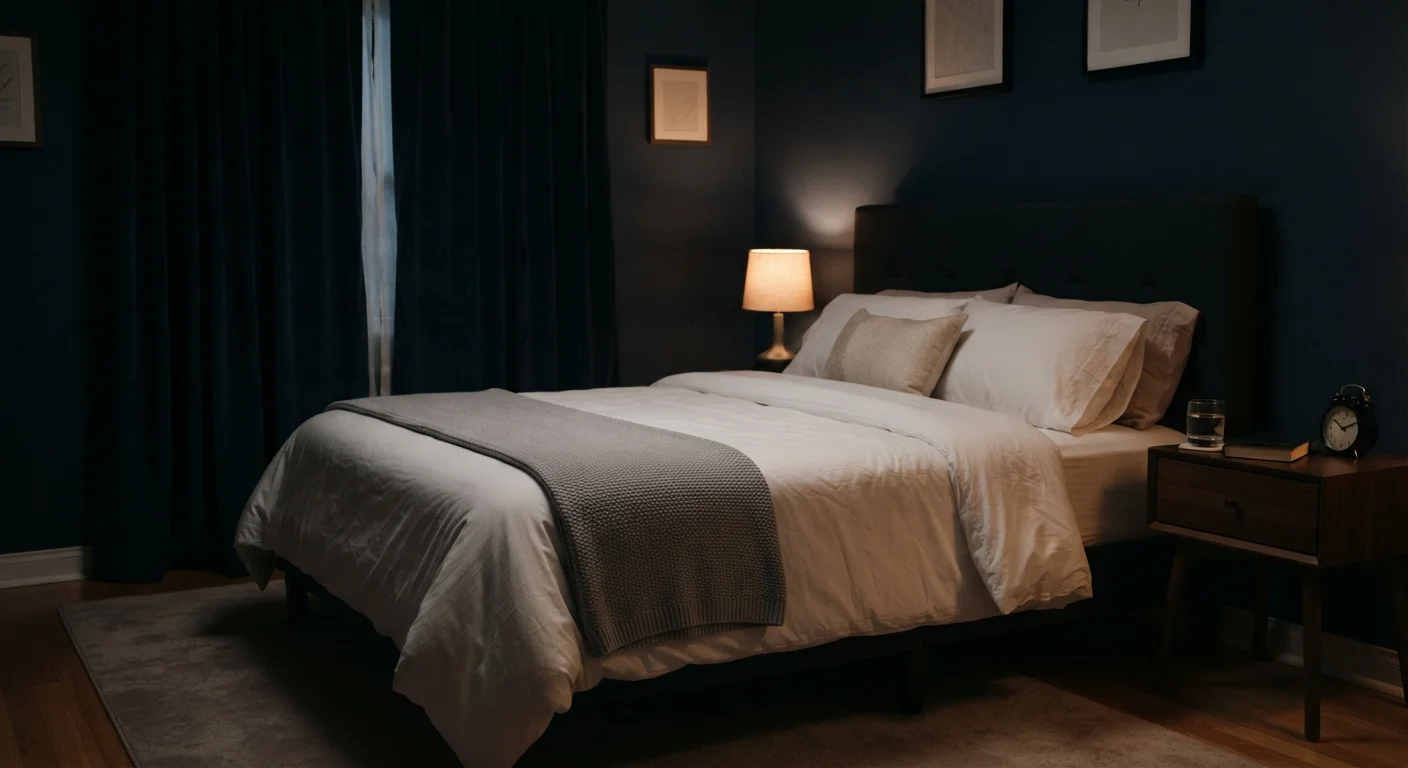
- A cool, dark room is one of the most reliably supported environmental sleep interventions.
Why Sleep Advice Gets So Confusing
Sleep is one of the most researched areas in health science, yet it's also flooded with oversimplified rules, recycled folklore, and tips that sound plausible but don't hold up under scrutiny. For anyone new to wellness, this creates a genuine problem: you want to sleep better, but you're not sure which advice to trust.
This article cuts through the noise using what sleep researchers and public health bodies — including the American Academy of Sleep Medicine — actually find in the evidence. You'll see common beliefs tested and corrected, so you can build habits that work without wasting energy on those that don't. For a practical next step, see our wind-down routine guide once you've sorted fact from fiction here.
This article is for general informational purposes only and is not medical advice. If you have concerns about your sleep or a possible sleep disorder, please consult a qualified healthcare professional.
Common Sleep Myths — and What the Evidence Actually Shows
Below, each widely repeated belief is paired with what current research actually supports. The explanations go beyond a simple yes or no, because understanding why a myth is wrong helps you apply the correct principle to your own habits.
Myth
You need exactly eight hours of sleep every night to be healthy.
Fact
Sleep needs vary by individual. Seven to nine hours is a general range for most adults, not a fixed target everyone must hit.
The "eight hours" figure is a population average, not a universal prescription. The American Academy of Sleep Medicine recommends adults aim for at least seven hours, but research shows meaningful individual variation — some people function well on six and a half hours, others need closer to nine. What matters more than hitting a number is how rested, alert, and functional you feel during the day. Consistently waking unrefreshed or fighting daytime sleepiness are more meaningful signals than falling short of an arbitrary count.
Myth
A glass of wine before bed helps you sleep better.
Fact
Alcohol may speed up sleep onset, but it significantly disrupts the quality of sleep — particularly REM sleep — in the second half of the night.
Alcohol is a sedative, which is why it can make falling asleep feel easier. But as it metabolizes over three to five hours, it causes sleep fragmentation, increased awakenings, and suppression of REM (rapid eye movement) sleep — the stage associated with memory consolidation and emotional regulation. Studies consistently show that alcohol-assisted sleep produces lower overall sleep quality and leaves people feeling less rested. The effect is dose-dependent: even moderate amounts measurably alter sleep architecture.
Myth
Screens before bed are the primary reason most people sleep poorly.
Fact
Blue light from screens has a real but modest effect on melatonin; behavioral stimulation and anxiety about sleep often cause more disruption.
Blue-light suppression of melatonin is a genuine physiological effect, but its real-world impact on sleep timing is relatively small for most people — typically measured in minutes, not hours. What matters more is what you're doing on those screens: emotionally activating content, work emails, or social media produce cognitive arousal that's harder to wind down from than the light itself. Additionally, the habit of worrying about screens — checking the time, stressing about not sleeping — can cause more wakefulness than the device. Reasonable limits on screens are sensible, but treating them as the sole culprit oversimplifies the picture.
Myth
You can catch up on lost sleep by sleeping in on weekends.
Fact
"Sleep debt" can be partially recovered, but irregular schedules impair your circadian rhythm and reduce sleep efficiency over time.
Research does show that extended recovery sleep can help offset some cognitive deficits from short-term sleep loss. However, social jet lag — the mismatch between your weekday and weekend sleep timing — undermines the body's internal clock (circadian rhythm), making it harder to fall asleep Sunday night and wake on Monday. Chronic irregular sleep timing is independently linked to metabolic and mood effects, separate from total sleep duration. A consistent wake time, even after a poor night, does more to stabilize sleep long-term than weekend catch-up.
Myth
If you can't sleep, staying in bed and resting still gives your body the recovery it needs.
Fact
Lying awake in bed for extended periods can worsen insomnia by reinforcing the mental association between bed and wakefulness.
This is one area where clinical sleep medicine is quite clear. A core principle of Cognitive Behavioral Therapy for Insomnia (CBT-I) — the most evidence-supported treatment for chronic insomnia — is stimulus control: if you've been lying awake for roughly 20 minutes, leaving the bed to do something calm in low light and returning only when sleepy is more effective than staying put. Prolonged wakefulness in bed teaches the brain to associate the bed with alertness rather than sleep, perpetuating the problem. Passive rest in bed is not equivalent to sleep from a physiological standpoint.
Sleep quality also has measurable effects beyond energy levels. Research consistently links poor sleep to stress regulation, mood, and even skin health — explored further in our piece on lifestyle habits that affect how skin looks.
What the Evidence Consistently Does Support
1 in 3
U.S. adults not getting enough sleep
According to the Centers for Disease Control and Prevention (CDC), about one-third of U.S. adults report regularly sleeping less than the recommended minimum.
~5–7 hrs
Caffeine half-life in most adults
Research on caffeine pharmacokinetics shows its half-life averages five to seven hours, meaning afternoon coffee can still be active in your system at bedtime.
65–68°F
Optimal bedroom temperature range for sleep
Sleep researchers generally cite a cool room — approximately 65 to 68 degrees Fahrenheit (18–20°C) — as supporting the body's natural core temperature drop at sleep onset.
Across decades of sleep research, a short list of habits shows up reliably as beneficial. A consistent wake time — even on weekends — is the single most supported behavioral anchor for a stable sleep schedule. Keeping your bedroom cool and dark takes advantage of the body's natural temperature drop during sleep onset. Limiting caffeine after midday respects the 5–7 hour half-life of caffeine in most adults. And treating your bed as a place for sleep (not working, scrolling, or watching content) reinforces the mental association between bed and rest.
Building emotional resilience through daily structure also supports better sleep indirectly. See our guide to habits linked to emotional resilience for complementary strategies that work alongside good sleep hygiene.
When Sleep Problems Go Beyond Hygiene
Sleep hygiene improvements help many people, but they are not a substitute for professional evaluation when sleep difficulties are persistent, severe, or accompanied by symptoms like loud snoring, gasping, or excessive daytime sleepiness. Conditions such as sleep apnea and insomnia disorder benefit from clinical assessment and targeted treatment. If better habits haven't helped after several weeks, please speak with a qualified healthcare provider.