

Key Takeaways
- Checking in with a healthcare provider first is essential if you have any existing health conditions.
- Setting one specific, realistic goal before you start dramatically improves follow-through.
- You need far less equipment than the fitness industry suggests to begin exercising safely.
- Understanding warm-up and cool-down basics reduces your injury risk from day one.
- Choosing a schedule that fits your real life — not an ideal life — is what makes exercise stick.
Summary
18 items · 20–40 minutes
Why a Pre-Workout Checklist Matters
Starting a fitness routine without preparation is one of the most common reasons beginners quit within weeks. The barrier is rarely motivation — it's confusion, minor injuries, or a program that doesn't fit real life. This checklist cuts through the noise by walking you through the decisions that actually matter before your first session.
Think of it as your starting-line audit. None of the items require special knowledge or expensive gear. Working through them takes less than an hour and sets a foundation that most exercise programs assume you already have. Once you've ticked these off, you'll be ready to move with confidence — not guesswork.
For a broader view of what getting started looks like, see our complete beginner's starting point.
Medical Clearance Comes First
If you have cardiovascular disease, diabetes, hypertension, a recent surgery, chronic joint problems, or any condition managed by prescription medication, speak with your healthcare provider before beginning any exercise program. This is not a precaution to skip — it's how you make sure your starting point is genuinely safe for your body. Your provider can also help you identify appropriate intensity levels and movements to avoid.
What You'll Need
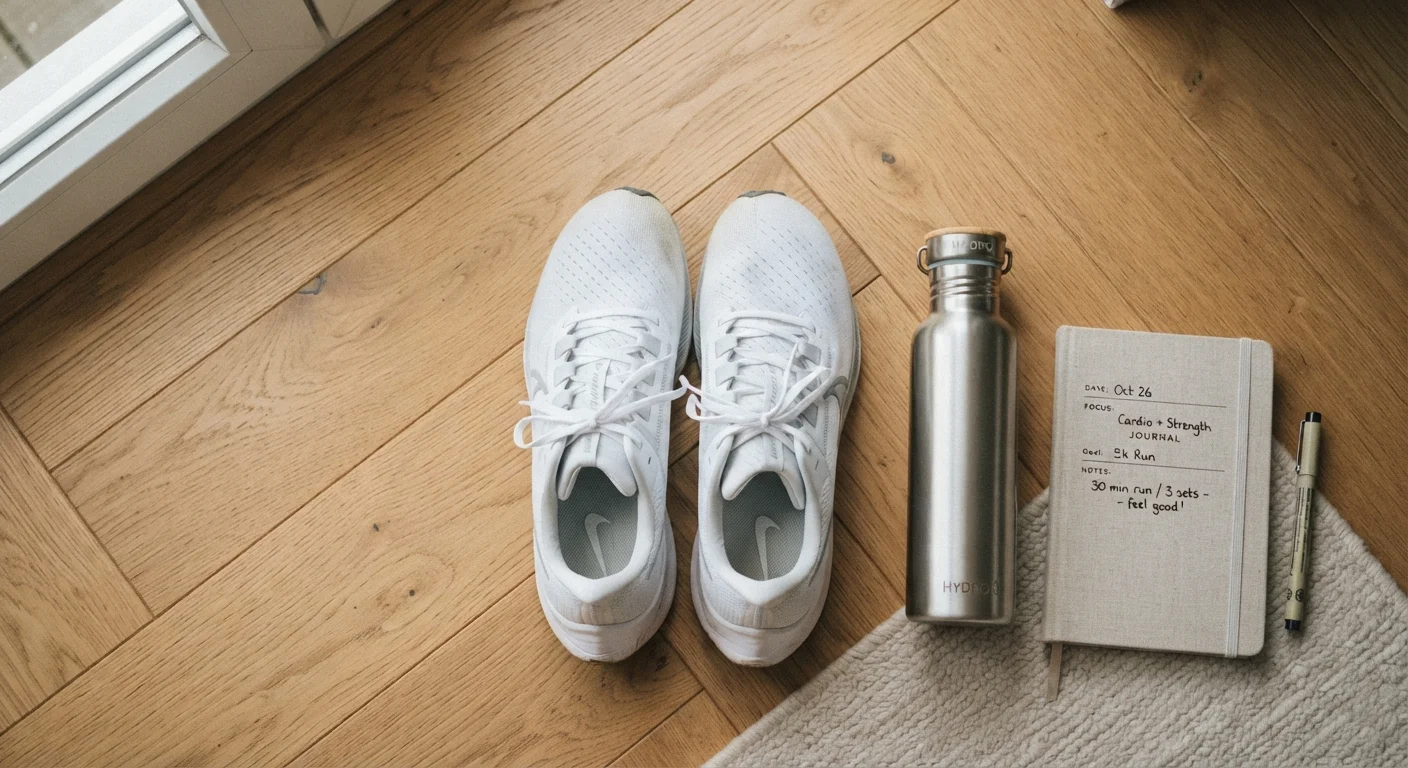
You don't need a fully equipped home gym to begin. The tools below cover the practical essentials. For a more detailed breakdown of what's genuinely useful versus what you can skip, see our minimal equipment guide for beginners.
Supportive Athletic Shoes
Provides the foot and ankle support needed to move safely, reduce impact, and prevent early injury.
Water Bottle
Keeps you hydrated throughout the session and helps regulate performance and focus.
Exercise Mat
Cushions floor-based movements like stretching, bodyweight exercises, or yoga-style work.
Notebook or Fitness Tracking App
Helps you log sessions, note what felt hard, and track consistency over time.
Timer or Stopwatch
Lets you structure intervals, warm-up and cool-down periods, and rest breaks without guessing.
Your Pre-Workout Readiness Checklist
Work through each group below before your first session. Items marked must are non-negotiable for safety. Should items are strongly recommended. Nice-to-have items are optional but helpful.
Health & Medical Clearance
Goal Setting
Scheduling & Environment
Gear & Clothing
Session Safety Basics
Don't Skip the Warm-Up on Day One
Cold muscles and connective tissue are significantly less pliable than warmed-up ones, making early-session movements a common source of strains and minor tears. Even five minutes of light movement before ramping up intensity meaningfully reduces this risk. Beginners are especially vulnerable because their bodies aren't yet adapted to exercise stress — protect that early momentum by building warm-up time into every plan from the start.
On warm-ups and cool-downs: many beginners skip these because they feel unnecessary. They aren't. See what warm-ups and cool-downs actually do to your body before your first session.
This article provides general health and fitness information for educational purposes only. It is not a substitute for advice from a qualified healthcare provider. If you have any medical conditions, injuries, or concerns, consult a licensed professional before beginning any exercise program.