

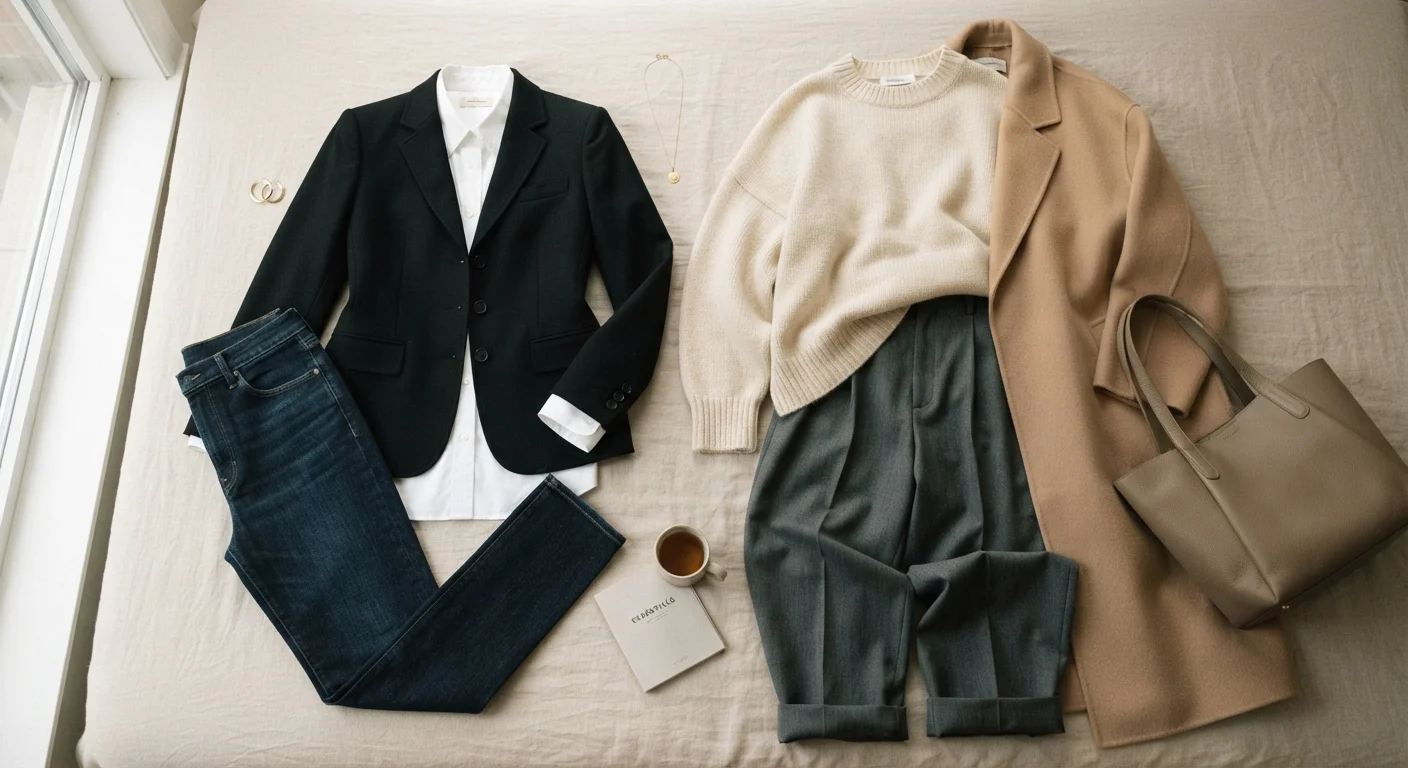
Key Takeaways
- Size labels vary significantly across brands and countries — they are a starting point, not a fixed standard.
- Shoulder seam placement is the single most important fit checkpoint on any top or jacket.
- Clothing can always be taken in but rarely let out — build your wardrobe with alteration potential in mind.
- Proportion — how garment lengths relate to your frame — matters as much as individual measurements.
- Bodies change over time; a garment that fit perfectly years ago may now need adjustment or replacement.
Clothing Fit
Clothing fit describes how a garment follows, supports, and moves with your body. A well-fitting piece sits comfortably at the shoulders, follows your natural silhouette without pulling or sagging, and allows easy movement. Good fit is not about a specific size — it is about proportion and structure relative to your unique measurements.
In tailoring, 'fit' is assessed at key anchor points: shoulder seam position, chest or bust ease, waist suppression, and hem length. Altering any one point changes the garment's entire visual balance.
The Myth of the Universal Size
Walk into any clothing store and you will find racks organised by size labels — XS through XXL, or numbered systems like 2 through 18. Those labels suggest a shared language, but they are anything but standardised. Sizing varies not just between countries but between individual brands, and even between different product lines within the same brand.
This is why a garment in your 'usual' size can pull across the shoulders in one shop and drown you in fabric at the next. The number or letter on a tag reflects how a particular brand chose to grade its patterns for a particular market. It tells you almost nothing about whether the garment will actually fit you.
The practical takeaway: treat size labels as a rough starting point. Your real guide is how the fabric behaves across your specific anchor points — shoulders, chest or bust, waist, and hips.
Sizing Varies Even Within a Single Brand
Many brands use different manufacturers for different product lines — which means a size medium in their knitwear range may fit quite differently from a size medium in their woven shirts. Always check the specific size guide for each product category rather than assuming consistency across a brand's full range.
What 'Good Fit' Actually Means at Each Anchor Point
Fit professionals assess garments at a handful of key checkpoints. Learning these gives you a reliable framework no matter what you are shopping for.
- Shoulders: On any structured top, blazer, or coat, the shoulder seam should land directly at the edge of your shoulder bone. If it droops lower, the sleeve hangs wrong; if it sits inward, the chest area pulls. Shoulder seams are expensive to alter — they are the most important checkpoint to get right at the point of purchase.
- Chest and bust: There should be enough ease (built-in extra space) to move comfortably without the fabric pulling horizontally or creating drag lines. Ease is intentional — a perfectly fitting shirt is not skintight.
- Waist: On fitted garments, the waist seam or shaping should sit at or near your natural waist, not your hip or midriff. On looser styles, the overall fabric volume should feel intentional rather than just large.
- Hem lengths: Hem placement affects proportion dramatically. A top hem that falls at the widest part of your hips can visually widen the silhouette; one that ends at the hip bone or tucks in creates a different effect. Neither is wrong — just understand what visual relationship the length creates with your frame.
See our guide to why outfits feel off for a deeper look at how proportions interact across a full look.
Why Bodies Change — and Clothes Don't
One of the most common reasons clothes stop fitting is simply that bodies are not static. Muscle development, hormonal shifts, age-related changes in posture, and lifestyle factors all influence measurements over time. None of this is cause for alarm — it is ordinary human biology.
Fabric also changes. Cotton shrinks with heat. Knitwear stretches. Elastic loses tension. A well-fitted item from a few years ago may now fit differently even if your body has not changed at all.
Schedule a Seasonal Wardrobe Check-In
Every season, pull out items you have not worn recently and actually try them on. Note what fits well, what has drifted, and what could benefit from a simple alteration. This habit takes about 30 minutes and saves you from rediscovering ill-fitting pieces only when you are running late.
The useful mindset shift is to stop treating your wardrobe as a fixed archive and start seeing it as something that evolves. A periodic review — trying on pieces you have not worn in a season — helps you catch fit drift early and decide whether an alteration is worth it or the item has simply run its course.
For guidance on building a wardrobe that accounts for fit across different garment sources, our overview of secondhand versus new clothing covers the sizing quirks unique to pre-owned items.
Proportion: The Fit Factor Nobody Talks About
Fit is not only about whether a garment is the right size — it is also about proportion. Proportion describes how the lengths, volumes, and visual weights of different garment pieces relate to each other and to your overall frame.
A cropped jacket over wide-leg trousers creates a different proportion than a longline blazer over the same trousers. One is not objectively better; both can work depending on the visual effect you want. But understanding proportion lets you make those decisions intentionally rather than hoping an outfit will come together.
30+
Countries with distinct sizing standards
The International Organization for Standardization (ISO) has documented that clothing size systems differ substantially across regions, contributing to widespread consumer confusion when shopping internationally.
~3–5%
Average cotton shrinkage per wash cycle
Textile studies generally find that untreated cotton fabrics can shrink noticeably in early wash cycles, which is why pre-washed or pre-shrunk labelling matters when assessing long-term fit.
A helpful starting principle: contrast in volume tends to look more intentional than matching volumes. Voluminous top with fitted bottom, or slim top with a wide skirt — these combinations read as deliberate. Two very voluminous pieces at the same time can work, but usually require more thought to balance.
For more on navigating body-shape guidance without falling into outdated rules, see our article on dressing for your body shape.