

Key Takeaways
- Boredom in pets can trigger stress responses, destructive behavior, and even physical health decline.
- Mental enrichment means giving pets opportunities to problem-solve, explore, and express natural behaviors.
- Dogs, cats, and small animals each need species-appropriate enrichment — one approach doesn't fit all.
- Enrichment doesn't require expensive gear; household items and routine adjustments often work well.
- Consistent daily mental stimulation supports emotional balance and reduces anxiety-driven behaviors.
Why Boredom Is More Than Just an Inconvenience
When a dog chews the furniture or a cat knocks objects off shelves repeatedly, owners often label it as misbehavior. In many cases, it's something more fundamental: a brain that isn't getting enough to do. Mental enrichment — the practice of providing stimulating, species-appropriate challenges for pets — addresses a genuine biological need, not a luxury add-on to care.
Animals in the wild spend large portions of their day foraging, hunting, investigating, and solving problems. Domesticated pets retain those same cognitive drives but often live in environments that don't activate them. The result can be chronic low-level stress, which over time is linked to immune suppression, compulsive behaviors, and heightened anxiety. For a deeper look at how unmet mental needs can escalate, see our guide on stress and anxiety in pets.
Understanding enrichment starts with recognizing that physical exercise and mental exercise are separate needs — a tired body doesn't automatically mean a satisfied mind.
Best Practices for Mental Enrichment Across Species
Effective enrichment matches the natural behavioral repertoire of your specific pet. Below are proven approaches organized around core principles that apply whether you have a dog, cat, rabbit, or small rodent.
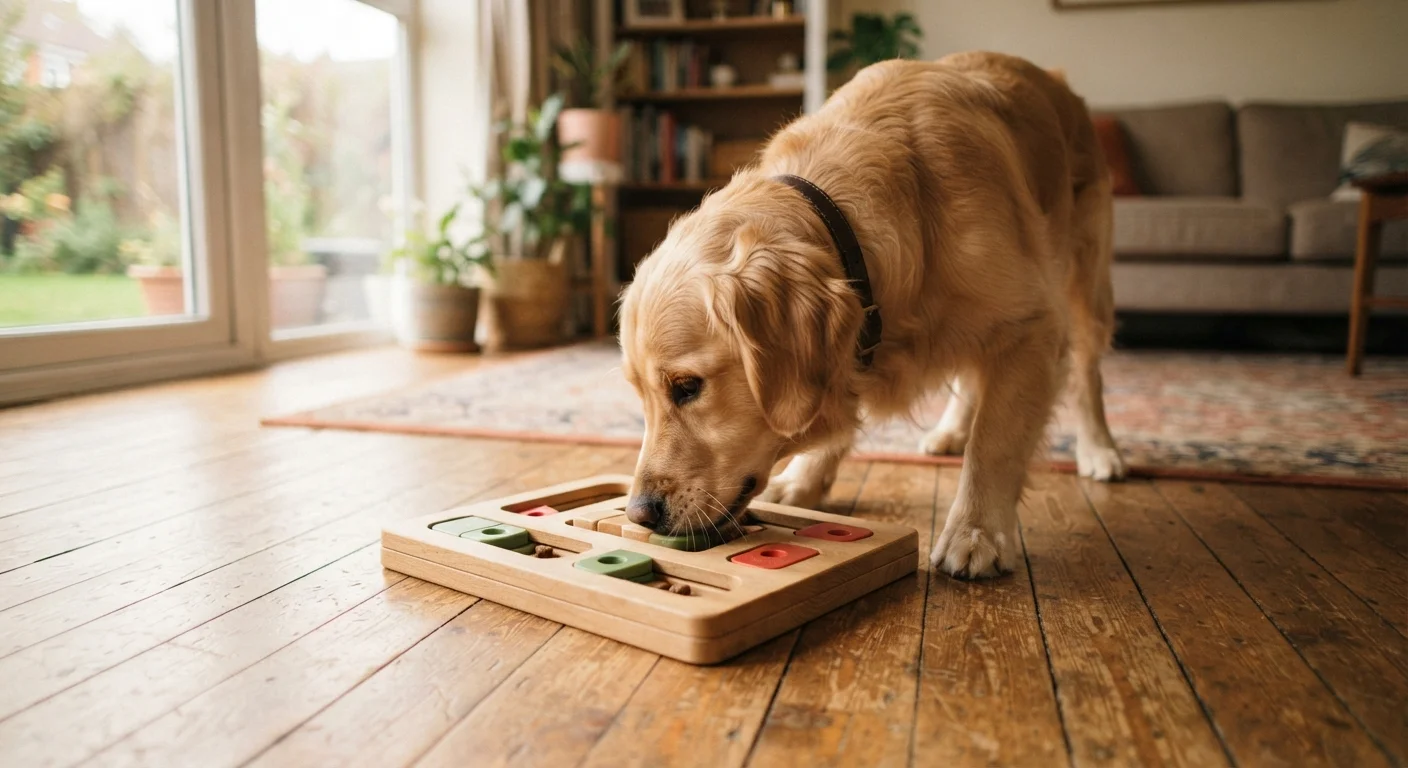
Use food puzzles and foraging opportunities instead of bowl feeding
Eating from a flat bowl takes seconds and provides no cognitive engagement. Foraging and problem-solving to obtain food mirrors natural behavior, activates the brain, and slows eating. This is one of the most well-supported enrichment strategies across veterinary behaviorist recommendations.
Rotate toys regularly rather than leaving all items available at once
Novelty drives exploration. When every toy is always accessible, habituation sets in quickly and stimulation value drops. Regular rotation keeps the same items feeling new and sustains investigative interest over time.
Incorporate scent-based activities for dogs
A dog's primary sensory experience of the world is olfactory. Scent work engages cognitive circuits that physical running does not, and is especially effective for calming high-energy or anxious dogs. Even short sniff sessions have a measurable calming effect.
Provide vertical space and observation points for cats
Cats are naturally drawn to elevated vantage points for surveying territory — it satisfies an instinctual need for safety and environmental control. Denying this leads to frustration, increased stress signaling, and sometimes inter-pet conflict. This is especially relevant for indoor cats; see our article on indoor vs. outdoor cats for context on environmental needs.
Teach new cues and skills using short, positive training sessions
Training is enrichment. Learning new behaviors requires concentration and decision-making, both of which are mentally taxing in a productive way. Short sessions of three to five minutes prevent frustration and keep the experience positive for the animal.
Allow safe, supervised exposure to new environments and stimuli
Novelty in the environment — new smells, sounds, textures — activates exploratory behavior and provides cognitive stimulation that familiar surroundings cannot replicate. Controlled exposure also builds resilience and reduces fearfulness over time.
Getting Started Without Overcomplicating It
New pet owners sometimes assume enrichment requires a dedicated budget or elaborate setups. It doesn't. The most impactful changes are often small, consistent additions to the daily routine — rotating a toy, hiding food, or allowing supervised exploration of a new space.
Tailor Enrichment to Your Pet's Age
Senior pets benefit greatly from mental stimulation, but the intensity and type should be adjusted. Gentler puzzle feeders, shorter training sessions, and low-impact scent games keep older animals cognitively engaged without physical strain. For a broader look at how care needs evolve, see our guide on senior pet wellness.
Enrichment also integrates naturally into a structured daily schedule. If you haven't established a consistent routine for your pet yet, our article on building a daily routine your pet can rely on is a practical starting point. Pairing predictable timing with varied mental challenges gives pets both the security of structure and the stimulation of novelty.
This article is for general informational purposes only and does not constitute veterinary advice. If your pet is showing signs of behavioral distress or health changes, consult a licensed veterinarian.