

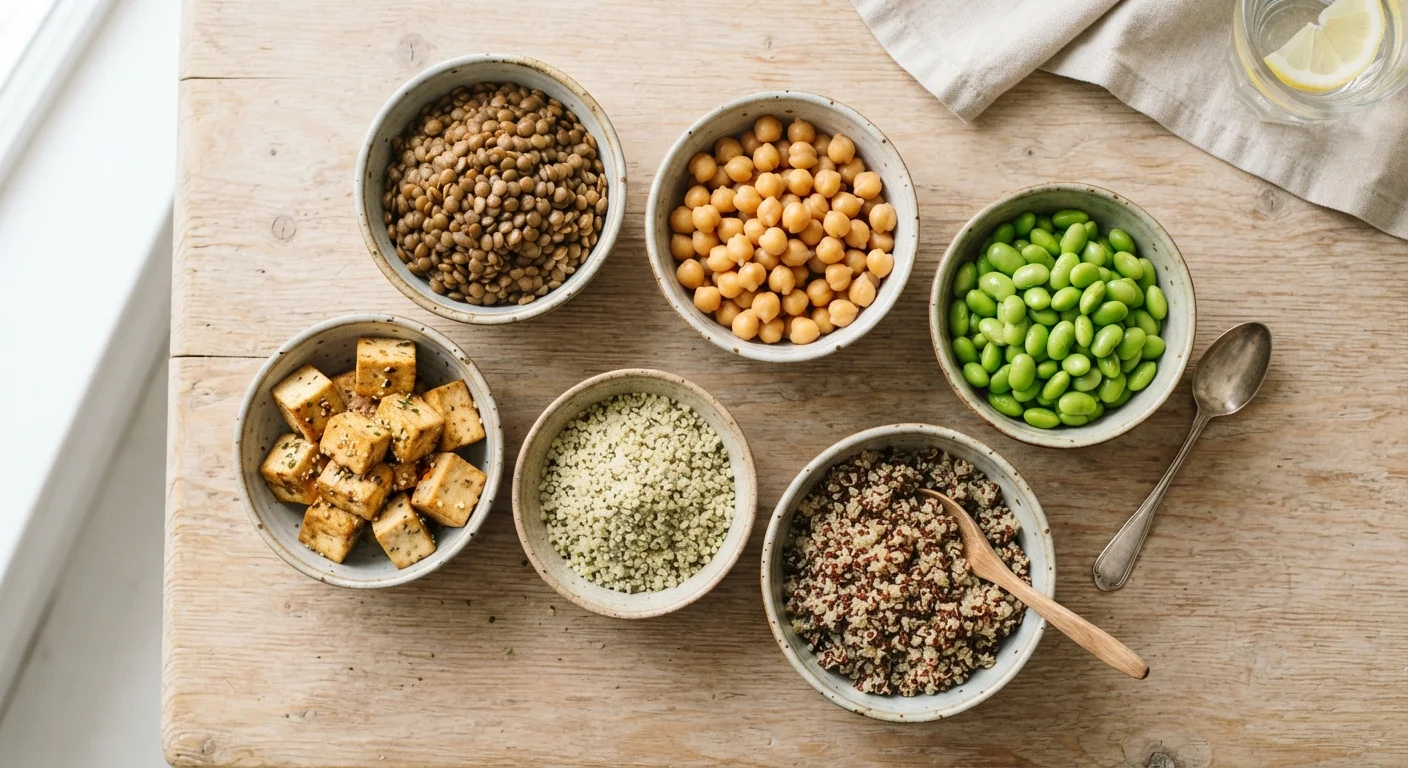
Key Takeaways
- No single plant food provides all essential amino acids in ideal proportions, but eating a variety across the day covers your needs.
- Legumes, soy foods, seeds, and whole grains are among the most protein-dense plant options available.
- Preparation methods like soaking, sprouting, and cooking can improve how well plant proteins are absorbed by the body.
- Plant proteins typically come packaged with fiber, healthy fats, and micronutrients animal proteins don't provide.
- Consulting a registered dietitian is the most reliable way to assess whether your protein intake matches your individual needs.
Why Plant Protein Deserves a Closer Look
Protein is one of the body's essential macronutrients — involved in everything from muscle repair to enzyme production and immune function. Many people assume animal foods are the only reliable source, but plant foods can meaningfully contribute to protein intake when chosen thoughtfully.
A key concept to understand is amino acids — the building blocks that make up protein. The human body requires nine essential amino acids it cannot produce on its own. Animal proteins tend to contain all nine in proportions the body uses efficiently. Most plant proteins are lower in one or more essential amino acids, which is why variety matters. Eating a mix of plant protein sources throughout the day — rather than relying on one — naturally fills those gaps.
If you're new to thinking about protein in your diet, our beginner's guide to balanced eating offers a grounding overview of how all macronutrients fit together. For a deeper look at whether food or supplements better meet nutritional needs, see what the evidence says about whole foods vs. supplements.
A Note on Protein Needs
General dietary guidelines suggest protein needs vary based on body weight, age, activity level, and health status. There is no universal target that applies to everyone. If you have specific health goals — such as muscle building, weight management, or managing a chronic condition — a registered dietitian can help you assess what intake level makes sense for your individual circumstances.
Key Plant-Based Protein Sources
Lentils
Lentils are one of the most accessible plant proteins available. A cooked half-cup serving provides roughly 9 grams of protein along with substantial dietary fiber and folate. They are also rich in iron, though plant-based iron (non-heme iron) is absorbed less efficiently than iron from meat — pairing lentils with a vitamin C-rich food can support absorption.
Red, green, and brown lentils each have slightly different textures when cooked but comparable nutritional profiles. They require no soaking and cook relatively quickly, making them a practical pantry staple.
Lentils deliver around 9 grams of protein per half-cup cooked, along with fiber, folate, and iron.
Tofu and Tempeh (Soy Foods)
Soy is one of the few plant proteins considered a complete protein — meaning it contains all nine essential amino acids in meaningful amounts. Tofu (made from condensed soy milk) and tempeh (fermented whole soybeans) both deliver this benefit, though their textures and uses differ considerably.
Firm tofu provides approximately 10 grams of protein per half-cup. Tempeh is denser and fermented, which may improve digestibility; it offers around 15–16 grams per half-cup. Both absorb flavors well and work across a wide range of cooking styles.
Soy foods like tofu and tempeh are among the very few plant sources that provide all essential amino acids.
Chickpeas and Other Legumes
Chickpeas, black beans, kidney beans, and edamame (fresh soybeans) all contribute meaningfully to protein intake. A half-cup of cooked chickpeas provides around 7–8 grams of protein alongside complex carbohydrates and fiber that support steady energy levels.
Edamame stands out in this group — as an immature soybean, it shares soy's complete amino acid profile and delivers approximately 8–9 grams of protein per half-cup. Canned legumes are nutritionally comparable to dried-and-cooked versions, making them a convenient option.
Edamame, a type of immature soybean, offers a complete amino acid profile in a simple snackable form.
Hemp Seeds and Other Seeds
Seeds are a compact protein source that integrate easily into existing meals. Hemp seeds are particularly notable: three tablespoons provide around 9–10 grams of protein and contain all essential amino acids in reasonable proportions. They also offer omega-3 and omega-6 fatty acids.
Pumpkin seeds (pepitas) contribute roughly 9 grams of protein per ounce and are high in magnesium and zinc. Sunflower and chia seeds provide smaller protein amounts but add fiber and micronutrients. Seeds require no cooking and blend into smoothies, yogurt, oatmeal, or salads with minimal effort.
Three tablespoons of hemp seeds supply around 9–10 grams of protein and a favorable fatty acid profile.
Quinoa and Protein-Rich Grains
Most grains are not high in protein relative to their calorie content, but quinoa is a notable exception. Technically a seed, quinoa cooks like a grain and provides approximately 8 grams of protein per cooked cup — along with all essential amino acids. It also contains iron, magnesium, and manganese.
Other whole grains such as oats, amaranth, and wild rice contribute smaller but still meaningful protein amounts (roughly 4–6 grams per cooked cup) and add variety to a plant-forward eating pattern. Using these as a base for bowls or salads rather than as a side dish maximizes their contribution.
Quinoa provides roughly 8 grams of complete protein per cooked cup, making it one of the most nutritious grains.
Nuts and Nut Butters
Almonds, peanuts (technically a legume), cashews, and walnuts each provide 5–8 grams of protein per ounce, along with heart-healthy unsaturated fats. Nut butters offer similar amounts per two-tablespoon serving and are a versatile way to incorporate protein into snacks or meals.
Nuts are calorie-dense, so portion awareness matters — not because nuts are unhealthy, but because they contribute significantly to overall energy intake. They pair well with carbohydrate-rich foods (fruit, whole grain crackers) to create more nutritionally balanced snacks.
Nuts and nut butters provide 5–8 grams of protein per serving, along with beneficial unsaturated fats.
Make Variety Your Default Strategy
Rather than searching for one perfect plant protein, aim to rotate through several sources across the week. Combining legumes with grains — such as rice and beans, or hummus on whole grain bread — naturally balances amino acid profiles without requiring any special planning. Variety also ensures a broader range of micronutrients.
Putting It All Together
Adding more plant protein to your eating pattern doesn't require a dramatic overhaul. A practical approach is to swap one or two familiar meals per week — replacing a meat-based dish with a lentil soup, a tofu stir-fry, or a grain bowl topped with chickpeas and hemp seeds. Over time, small changes like these build familiarity with new ingredients and create genuine variety. For structured ideas on introducing that variety week by week, building a nutritionally varied weekly eating pattern offers practical starting points. If you're also focused on physical activity, the Fitness Essentials hub addresses how nutrition supports an active routine.
This article is for general informational and educational purposes only and is not a substitute for personalized medical or nutritional advice. Individual protein needs vary based on age, health status, activity level, and other factors. Please consult a registered dietitian or qualified healthcare professional for guidance specific to your situation.