

Key Takeaways
- Gap insurance covers the difference between your car's actual cash value and your remaining loan or lease balance after a total loss.
- New and nearly new financed vehicles depreciate faster than loan balances shrink, creating a gap that can persist for years.
- Standard collision and comprehensive policies do not cover negative equity — gap insurance must be added separately.
- Gap coverage is most valuable in the first two to three years of a loan, especially with low down payments or long loan terms.
- Always compare gap insurance pricing from your insurer versus the dealership — costs and terms differ significantly.
Gap Insurance
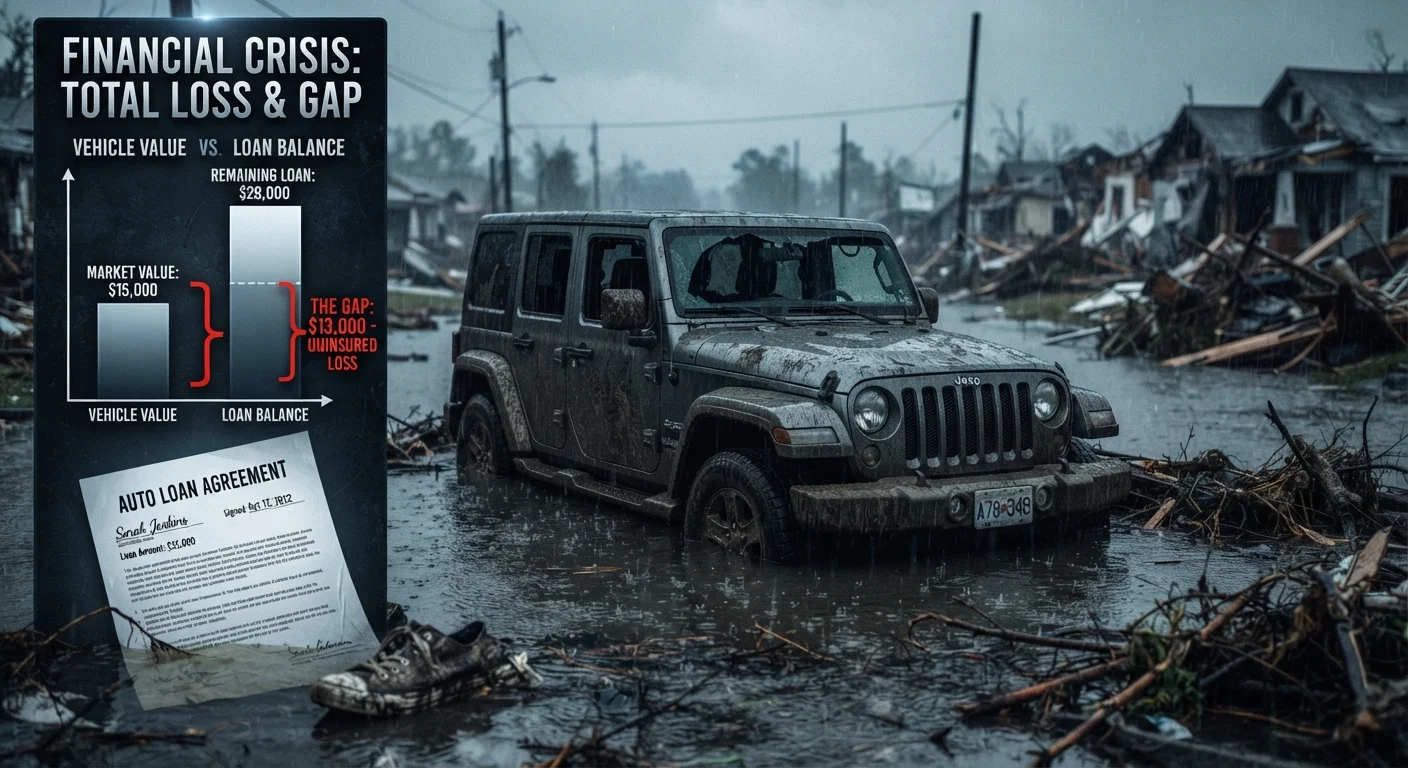
Gap insurance — short for Guaranteed Asset Protection — covers the difference between what your auto insurer pays out after a total loss and what you still owe on your car loan or lease. When a financed vehicle is stolen or declared a total loss, a standard comprehensive or collision policy only pays the car's current market value. If your loan balance is higher than that value, you're responsible for the remaining amount out of pocket — and gap insurance is designed to cover exactly that shortfall.
Gap coverage is technically an add-on product, not a standalone policy. It can be purchased through an insurer, a lender, or a dealership's finance office, each with different pricing and terms.
Why a Standard Policy Isn't Enough After a Total Loss
Most first-time car buyers assume that as long as they carry collision and comprehensive coverage, a total loss is fully covered. That assumption has a costly blind spot: insurers pay the vehicle's actual cash value (ACV) — what the car is worth on the market at the time of the loss, after depreciation — not what you owe on it.
New vehicles can lose 15–20% of their value in the first year alone. If you financed most of the purchase price, your loan balance shrinks more slowly than the car's market value. The result is a gap — sometimes thousands of dollars — that your standard policy simply won't cover. To understand how ACV is calculated and why it matters, see our explanation of agreed value vs. actual cash value.
Gap Insurance Doesn't Cover Everything
Gap coverage pays the difference between your ACV payout and your outstanding loan or lease balance — nothing more. It does not cover missed payments, extended warranties rolled into the loan, negative equity from a previous vehicle, or any amount your insurer reduces due to a deductible (unless your policy specifically includes deductible coverage). Always read the policy terms before assuming what's included.
For a broader look at how collision and comprehensive coverage work — and what each covers — see our guide to the three pillars of auto coverage.
Who Is Most Exposed to the Coverage Gap
Not every financed driver carries the same risk. The gap is widest — and lasts longest — in specific lending and purchasing situations:
- Low or no down payment: Starting with little equity means you're underwater from day one.
- Long loan terms (72–84 months): Stretching payments means the loan balance shrinks very slowly relative to depreciation.
- High-depreciation vehicles: Some models lose value faster than average, widening the gap further.
- Rolled-over negative equity: If you owed money on a previous vehicle and folded that balance into a new loan, you start even further behind.
- Leased vehicles: Lease agreements often require gap coverage because the residual value calculation can leave a gap at total loss.
~20%
Value a new car can lose in year one
Industry estimates from vehicle valuation services suggest new vehicles commonly depreciate 15–20% within the first 12 months of ownership.
~38%
Share of new car loans with terms over 72 months
Experian's State of the Automotive Finance Market reports have consistently shown a significant share of new vehicle loans extending to 72 months or longer.
$3,000–$5,000
Typical gap amount on a new vehicle total loss
Consumer financial education sources indicate the coverage shortfall commonly falls in this range for buyers who financed with minimal down payments in the first two years.
Understanding the full cost of vehicle ownership — including how financing decisions affect your insurance exposure — is covered in detail in our article on car ownership costs beyond the sticker price.
Where to Buy Gap Coverage — and What to Watch For
Gap insurance is available through three main channels, and the price and terms vary considerably between them:
- Your auto insurer: Often the most affordable route. Gap is added as an endorsement to your existing policy and is typically cancelable without penalty.
- Your lender: Some banks and credit unions offer gap coverage as part of the loan package. Terms vary widely — read the fine print.
- The dealership's finance office: Convenient, but often the most expensive option. The cost may be rolled into the loan, meaning you also pay interest on it.
Compare Prices Before Buying at the Dealership
Gap coverage through a dealership's finance office can cost two to three times more than the same coverage added to an existing auto policy. Get a quote from your insurer first. If you've already purchased dealer gap coverage and find a better rate, check whether your policy allows cancellation for a prorated refund.
Regardless of where you purchase gap coverage, it only applies if you also carry collision or comprehensive coverage on the same vehicle. If those coverages lapse, gap coverage typically becomes void.
For a broader look at coverage decisions that catch new policyholders off guard, see what first-time policyholders wish they'd known.
This article is for general informational purposes only and does not constitute insurance, financial, or legal advice. Coverage terms, eligibility, and pricing vary by provider and state. Consult a licensed insurance agent or financial adviser for guidance specific to your situation.